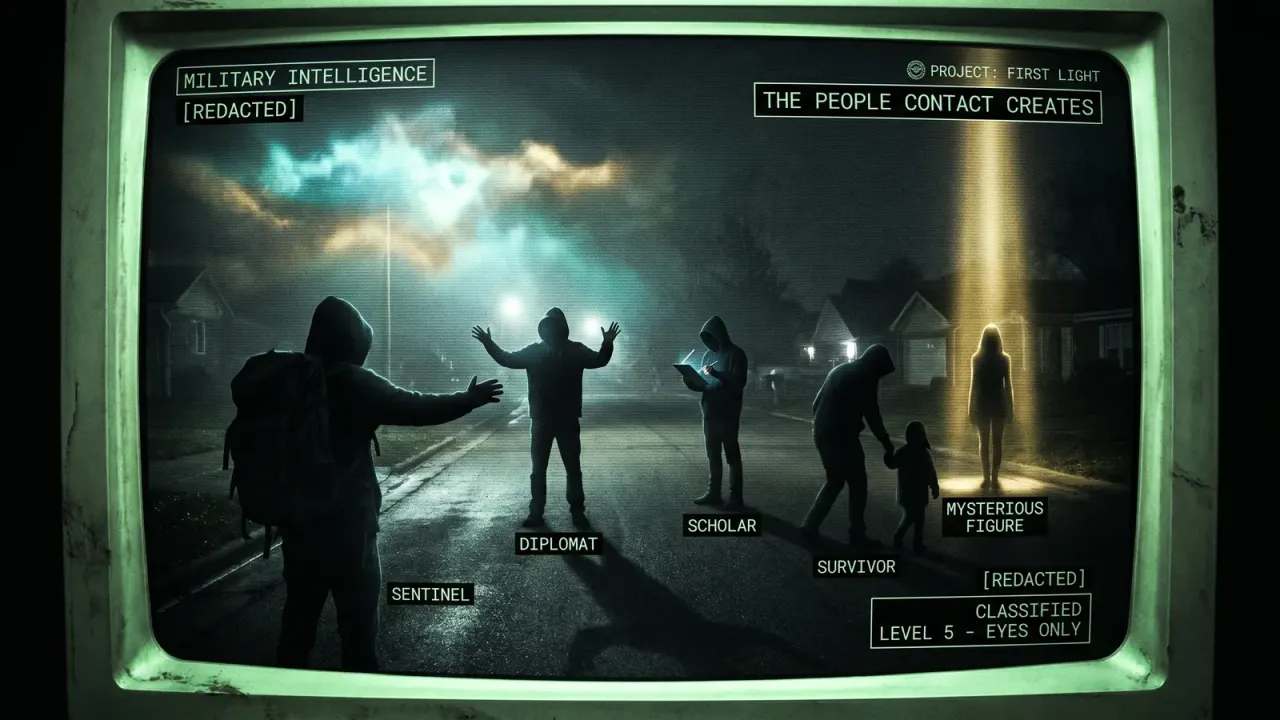
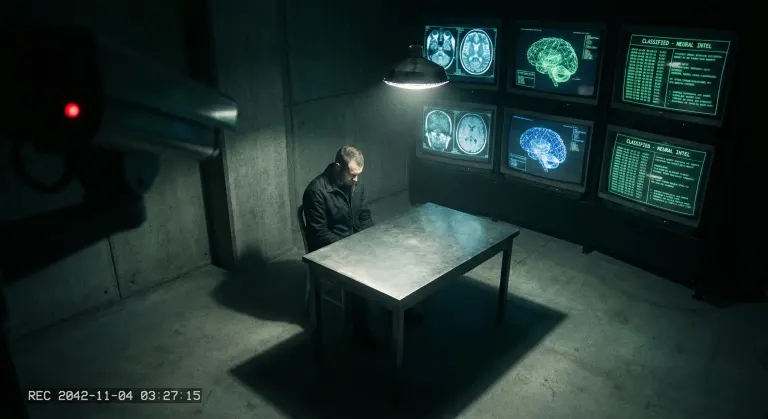
The five types of people during alien contact are not fantasy castes. They are practical civilian response roles. If non-human intelligence became undeniable in public, people would not react as one species with one mind. They would protect, communicate, study, withdraw, or step forward.
You may see this question framed as four types of people during alien contact. The current DISCLOSURE model uses five because Survivor is too important to hide inside the other roles, and First Contact is too rare to treat as a normal personality type.
The point is not to find the coolest label. The point is to know your useful instinct and your dangerous instinct before the room changes.
Sentinel protects. Diplomat de-escalates. Scholar documents. Survivor preserves life. First Contact engages on behalf of more than the self.
FIELD CARD // ROLE CHECK UNDER PRESSURE
- Sentinel protects by controlling perimeter, not charging forward.
- Diplomat lowers human temperature before attempting contact.
- Scholar preserves the record before interpretation contaminates it.
- Survivor reads exits and moves dependents before the crowd moves.
- First Contact steps forward only when the moment demands it.
// TYPE 01: THE SENTINEL
The Sentinel notices exits, crowds, children, doors, vehicles, and threat angles before everyone else finishes saying, "What is that?" During first contact, this person becomes the unofficial perimeter.
Their value is order. They keep people back, reduce stampede risk, protect witnesses, and stop curiosity from becoming a casualty report.
Their failure mode is premature hostility. A Sentinel can mistake uncertainty for danger and escalate before anyone understands the signal.
- Give calm commands
- Hold distance
- Protect without provoking
- Coordinate with a Scholar
- Threat bias
- Defensive escalation
- Dismissing new data
- Turning fear into orders
// TYPE 02: THE DIPLOMAT
The Diplomat looks for intent before threat. They listen for patterns, watch for repetition, and instinctively lower the emotional temperature around them.
Their value is bridge-building. In a contact scenario, the first human mistake may be assuming the unknown works like us. The Diplomat is better at holding that gap open.
Their failure mode is projection. Wanting communication can make a Diplomat see friendliness, invitation, or meaning before the evidence supports it.
- Neutral language
- De-escalation cues
- Listening under stress
- Partnering with a Sentinel
- Assuming benevolence
- Moving too close
- Ignoring risk signals
- Over-reading patterns
// TYPE 03: THE SCHOLAR
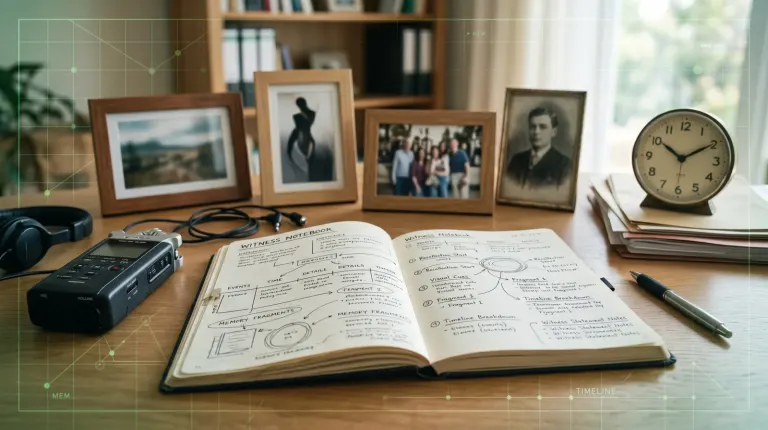
The Scholar reaches for data. While others argue about what the event means, the Scholar records what happened: time, angle, movement, sound, weather, witnesses, sequence.
Their value is evidence. After contact, humanity will need clean records more than hot takes. Scholars are the people most likely to preserve those records.
Their failure mode is analysis paralysis. The Scholar can keep collecting information when the correct next move is to warn, retreat, or help someone nearby.
- Fast video habits
- Plain observation notes
- Evidence backups
- Short decision windows
- Delaying action
- Emotion shutdown
- Ignoring people nearby
- Needing certainty first
// TYPE 04: THE SURVIVOR
The Survivor maps exits before anyone admits they may need one. They think about family, pets, vehicles, medication, roads, signal loss, and how to get people away from a pressure point.
Their value is continuity. Most civilian harm during a public anomaly would come from panic, crowd compression, traffic, bad decisions, and rumor. Survivors reduce those secondary failures.
Their failure mode is leaving too soon. If the Survivor moves without coordination, they can trigger panic, lose evidence, or abandon people who needed a calmer exit.
- Household rally points
- Quiet withdrawal
- Dependent checks
- Wait for one clear signal
- Panic movement
- Leaving before facts
- Breaking group contact
- Over-focusing on escape
// TYPE 05: FIRST CONTACT
First Contact is not the person who wants attention. It is the person who can orient under shock, hold fear without obeying it, and act as if the moment belongs to more than their ego.
Their value is presence. In rare situations, someone may need to engage, signal, translate human intent, or make the first calm choice while everyone else is still processing reality.
Their failure mode is self-importance. The moment First Contact becomes a performance, the role is corrupted. The representative serves the species, not the spotlight.
- Humility under pressure
- Clear consent signals
- Slow engagement
- Support from all roles
- Ego capture
- Acting alone
- Mistaking impulse for destiny
- Ignoring safety support
// WHICH TYPE IS BEST?
None. A first contact scenario needs all five. The Sentinel keeps the crowd from surging. The Diplomat keeps fear from becoming hostility. The Scholar preserves evidence. The Survivor protects continuity. First Contact engages only when engagement is truly required.
The problem is not having a type. The problem is not knowing it. Unnamed instincts run the room. Named roles can be trained.
Use the full archetypes file for deeper role breakdowns, then take the classification quiz to identify your primary and secondary response pattern.
// HOW TO USE YOUR RESULT
Once you know your type, do not stop at the label. Pair it with protocol. Sentinels should study de-escalation. Diplomats should study boundaries. Scholars should study action triggers. Survivors should study timing. First Contact profiles should study humility and team support.
Then move into the First Contact briefing, the readiness score, and the psychology file. The quiz tells you where you start. Training decides whether that starting point becomes useful.
Your archetype is a default, not a destiny. The system identifies the role you reach for under pressure and the failure mode that comes with it. That is where preparation begins.