
UFO encounter psychology explains why normal people do strange things when they see something that does not fit their worldview. Some freeze. Some laugh. Some panic. Some document with unnatural focus. The reaction is not random. It is stress physiology meeting the unknown.
If you have ever wondered why a witness did not film longer, why they approached, why their story changed, or why they sounded too calm, the answer usually starts with the nervous system. The body reacts before the mind has a clean explanation.
That is why first contact readiness begins before first contact. You cannot choose a perfect response in the middle of shock. You can only train a better default.
Why do people freeze during UFO encounters?
Freeze is not weakness. Freeze is the nervous system pausing when it cannot decide whether to fight, run, approach, or ignore. A large dog, a house fire, or an oncoming vehicle fits a known category. A silent object making impossible turns does not.
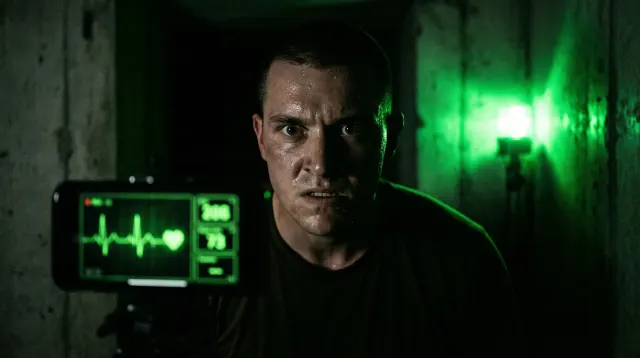
When the brain cannot categorize a possible threat, it spends extra time searching for a match. During that search, speech can slow down, hands can shake, and simple tasks like opening the camera app can feel strangely difficult.
This is why the best UFO sighting advice is boring and repetitive: breathe, record, narrate, keep distance. A simple script gives the frozen brain a track to follow. The field guide at what to do if you see a UFO exists for exactly that moment.
Why do some witnesses panic?
Panic usually comes from meaning, not just sight. A light in the sky becomes frightening when the witness decides it means danger, invasion, judgment, loss of control, or the collapse of ordinary reality. That meaning may be wrong. The body does not wait for the fact check.
The practical response is to narrow the question. Do not ask, "What does this mean for humanity?" during the first minute. Ask, "What am I seeing, where is it, what is it doing, and how do I keep people safe while I record?"
- Name the observable facts out loud.
- Avoid contagious language like "run" or "we are doomed."
- Give nearby people jobs: record wide, watch the object, note the time, move children away from roads.
- Keep speculation out of the first account.
Why does memory change after a UAP sighting?
Memory is not a recording. It is a reconstruction. Under stress, the central image can feel permanent while timing, distance, direction, and sequence become unreliable. That is why two honest witnesses can disagree about the same UFO encounter.
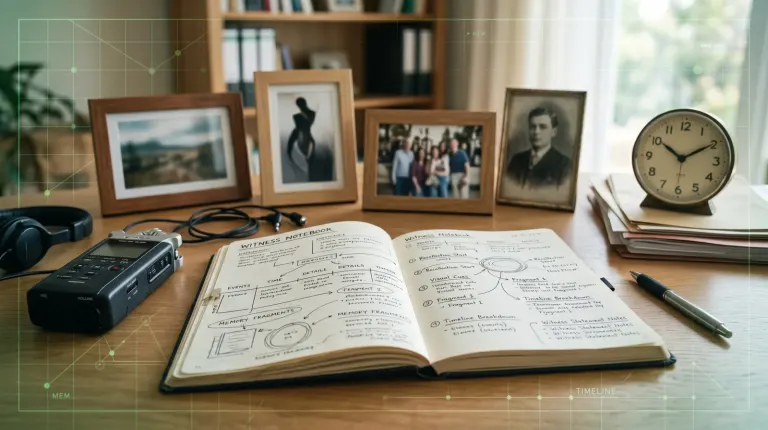
Write your account before you replay the footage, read comments, or compare stories. This protects your first memory from being overwritten by someone else's certainty.
Use plain notes: exact time, exact place, weather, direction, sound, movement, other witnesses, physical sensations, and what you were doing before the sighting. If you do not know, write "unknown." Clean uncertainty is better than confident invention.
Why do some people document instead of freeze?
Some people recover quickly because they have a role. Photographers, pilots, nurses, officers, researchers, parents, and crisis workers often respond to stress by doing a familiar task. The task becomes a bridge back to function.
You can build that bridge without a professional background. Practice opening video fast. Practice narrating what you see without explaining it. Practice stepping back instead of moving closer. Practice asking one calm witness to watch with you.
That is not pretending contact is certain. It is preparing the same way you prepare for any rare event with high confusion.
What does your archetype predict?
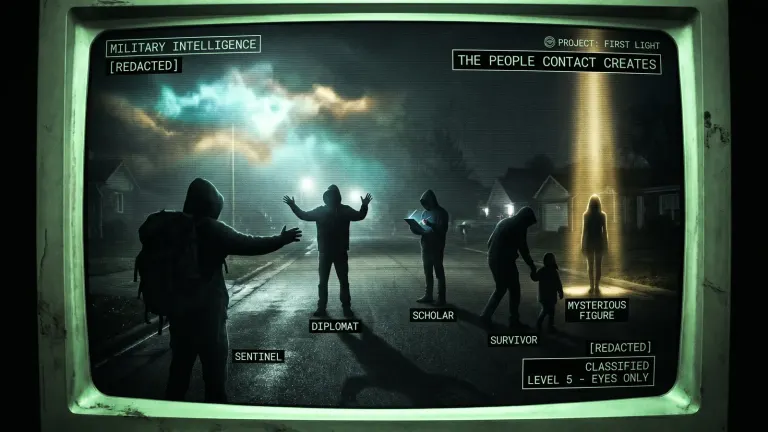
The DISCLOSURE archetypes are not horoscope labels. They are field roles for stress. Sentinel, Diplomat, Scholar, Survivor, and First Contact describe what a civilian is likely to prioritize when the unknown becomes immediate.
- Sentinel: protects people and space, but may frame the unknown as hostile too quickly.
- Diplomat: looks for communication, but may assume intent before evidence supports it.
- Scholar: documents and analyzes, but may delay action while seeking certainty.
- Survivor: moves people to safety, but may leave before useful information is captured.
- First Contact: can orient toward engagement, but must guard against ego and overreach.
Read the full archetype index, then take the classification quiz. The goal is not to feel special. The goal is to recognize your failure mode while there is still time to correct it.
How do you train a better reaction?
Start with short drills. Look at the sky for 30 seconds and practice describing without interpreting. Record a moving object with a reference point. Rehearse a household sentence: "Stay back, I am recording, you note the time." Review the alien contact preparation guide once, then make it smaller until you can remember it under stress.
In a real event, the prepared civilian does not become fearless. Fearless people do reckless things. The prepared civilian becomes useful while afraid.
Common questions
Can UFO witnesses remember events accurately?
Witnesses can remember important details, but stress can distort timing, distance, sequence, and interpretation. Immediate notes help protect the first account.
How can I prepare my reaction to a UAP sighting?
Practice calm breathing, fast video recording, factual narration, distance discipline, and archetype awareness before a sighting happens.