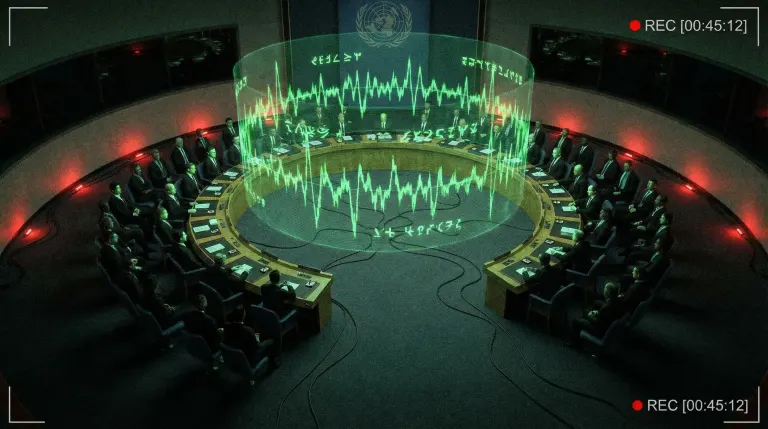
SETI post-detection protocol is the scientific playbook for what should happen after a credible signal from beyond Earth is detected. The useful civilian version is simple: verify first, announce carefully, preserve the data, and do not rush a reply.
This is not a secret world government script for first contact. It is a set of professional norms built around science, evidence, and coordination. That distinction matters because a confirmed signal would create two emergencies at once: a data problem for scientists and a meaning problem for everyone else.
What is SETI post-detection protocol?
SETI stands for Search for Extraterrestrial Intelligence. Its post-detection protocol is the set of principles scientists have used to think through what should happen if a candidate extraterrestrial signal appears credible.
The core idea is restrained and practical. A team should confirm the signal, rule out human interference, preserve the evidence, notify relevant scientific bodies and authorities, and make verified information available. A reply should not be sent casually by one group acting alone.
Why do people ask about this?
People ask about SETI post-detection protocol because they want to know whether humanity has a plan. The answer is partly yes. Scientists have thought about signal verification. Institutions have discussed notification paths. Researchers have warned against premature replies.
The missing piece is the civilian layer. A signal protocol does not teach your family how to process world-changing news. It does not stop fake translations, fake screenshots, or panic buying. It does not tell you whether you freeze, lead, document, or soothe people around you.
What happens before a signal is announced?
A serious SETI candidate would need aggressive checking. Scientists would look for ordinary causes: satellites, aircraft, terrestrial radio frequency interference, equipment issues, software artifacts, and repeatability problems. A signal that vanishes once and never repeats is harder to treat as contact.
Independent confirmation is the hard line. If another observatory can observe the same target, frequency, timing, or pattern, confidence improves. If the original data cannot be repeated or verified, the public should not treat it as a settled first contact event.
Does the protocol say we should reply?
No serious reading turns post-detection protocol into an automatic reply order. The common scientific posture is caution. A response could carry cultural, political, scientific, and security implications. One team, one billionaire, one livestream, or one nation should not decide for everyone.
That is why the civilian first-contact lesson is not "send a message." It is "do not lose discipline while the adults argue over the microphone." The first human crisis may be interpretation, not invasion.
Some contact models do not start with a message at all. The AI probe theory considers a signal that arrives as a machine, not a message: an automated system that may be executing instructions, which changes the question of whether and how to reply.
How should civilians prepare?
- Hold judgment. Candidate signal, verified signal, message, and origin are different claims.
- Save sources. Track the announcing team, observatory, timestamp, and original statement.
- Watch language. "Interesting candidate" is not the same as "confirmed non-human signal."
- Reduce noise. Do not amplify translations or countdowns without primary evidence.
- Prepare people. Some will panic, joke, deny, or spiral. Calm is a public utility.
Use the First Contact briefing for the human layer, then check readiness before the feed turns into a siren.
How this fits disclosure readiness
SETI protocol is a model for source discipline. It teaches civilians to slow down, ask what is verified, and resist filling gaps with theatrical certainty.
DISCLOSURE adds the missing behavioral layer: your role under information shock. Take the classification quiz before the announcement, not after. A signal may be scientific. Your reaction will be human.
Common questions
What is the SETI post-detection protocol?
SETI post-detection protocol refers to scientific principles for handling a credible signal, including verification, notification, careful communication, and broad consultation before any reply.
Is the SETI post-detection protocol law?
No. The best-known post-detection principles are scientific norms and guidance, not a world government law that controls every telescope, state, or private actor.
Does SETI have a plan for civilians after a signal?
SETI protocols focus on verification and communication among scientific and public institutions. Civilian behavior, panic control, household readiness, and documentation are separate problems.
See also For how many signals there might be to detect, see the Drake equation calculator.