

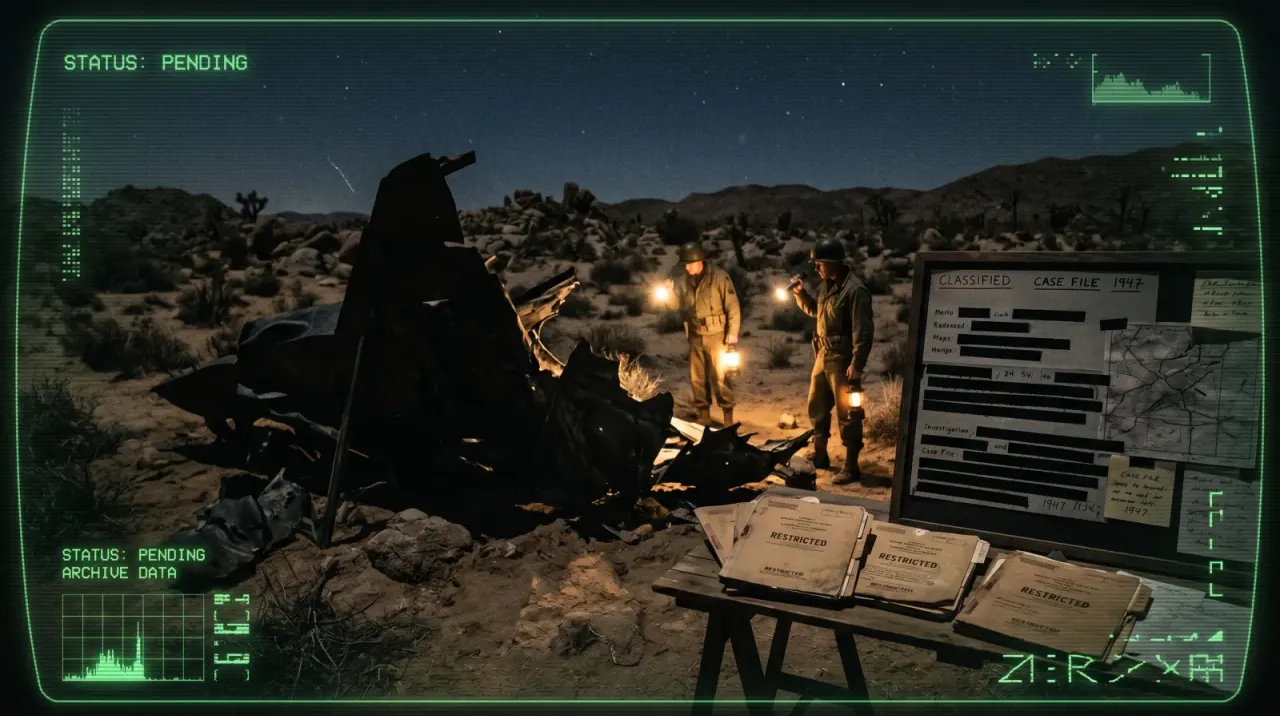

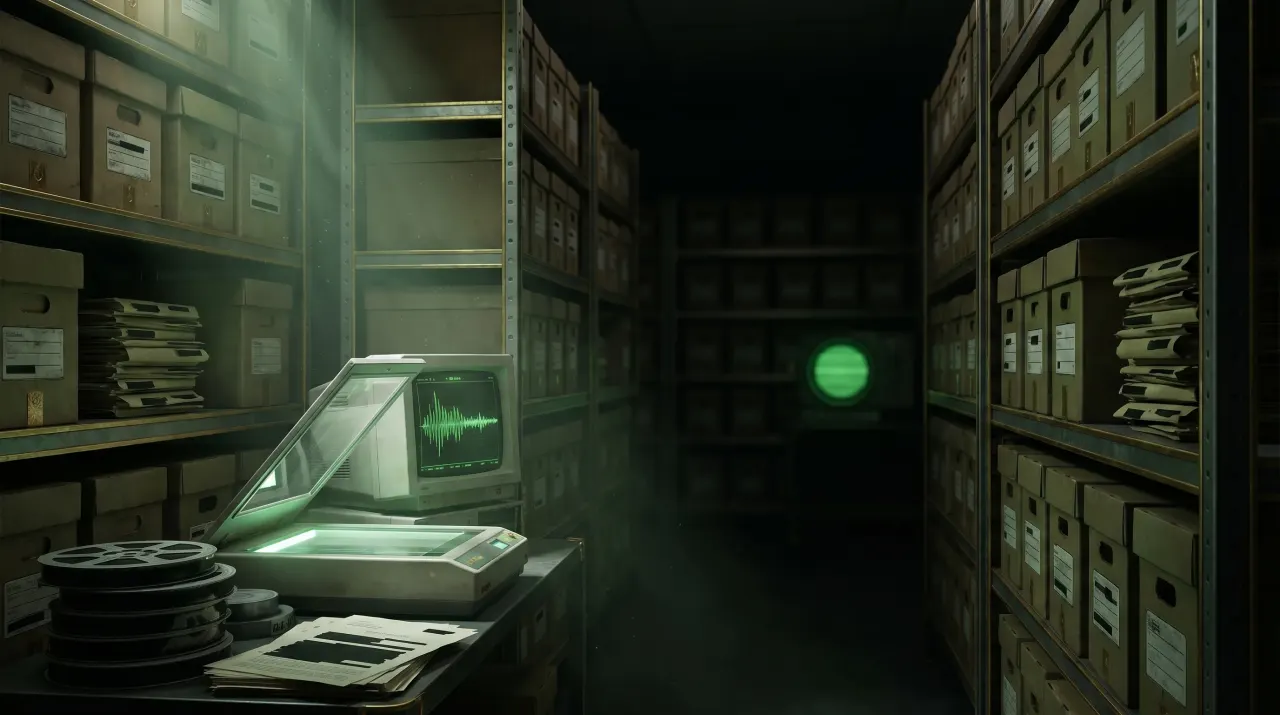
The UAP Records Collection is the National Archives system for organizing federal records related to unidentified anomalous phenomena. It matters because the disclosure fight is no longer only testimony and headlines. It is records, metadata, transfers, redactions, and public access.
If you are trying to understand what governments actually documented, the UAP Records Collection is one of the places to watch. It will not answer every question. It does give civilians a cleaner way to follow the paper trail.
What is in the UAP Records Collection?
NARA describes the collection as records related to UAP, technologies of unknown origin, and non-human intelligence or equivalent subjects, with specific statutory language and exclusions. In practice, that can include agency records, reports, correspondence, images, videos, PDFs, and metadata that help civilians see where a file came from.
The collection also intersects with older UFO and UAP holdings. That includes historic material like Project Blue Book related records and newer digital transfers from federal agencies. The important point is not that every file is dramatic. The important point is that records can be traced.
Why did this collection exist?
The 2024 National Defense Authorization Act required federal agencies to identify UAP records and transfer digital copies to the National Archives. That does not mean the whole archive appears at once. NARA receives and adds materials on an ongoing basis.
This is why release culture feels confusing. A file can exist, be identified, be prepared, be transferred, be redacted, be cataloged, be available onsite, and later appear online. Those are separate states. Treating them as one event creates bad analysis.
What do bulk downloads change?
Bulk downloads make digitized and born-digital UAP-related records easier to inspect at scale. NARA's bulk download pages can include zip files for image, video, and PDF files, plus JSON metadata. That is useful because metadata often carries the boring facts that keep interpretation honest.
Bulk access does not remove the need for caution. A file title can be misleading. A description can be incomplete. A clipped image can travel faster than the catalog context. The prepared reader always keeps the record identifier attached to the claim.
What is not included?
Not every material is available online. Some records may be unavailable because of rights restrictions, access procedures, redactions, or because the record has not moved through transfer and catalog systems yet. Some records may require onsite access before they become available in the online catalog.
That gap does not automatically mean conspiracy. It also does not mean the gap is irrelevant. In a public records environment, the absence, delay, or redaction pattern is a signal to track with discipline.
How should civilians read releases?
- Keep the record chain intact. Save the URL, identifier, agency, and date range with every quote.
- Read before sharing. A dramatic filename is not the same as a dramatic finding.
- Compare duplicates. Redacted and unredacted versions can tell different parts of the story.
- Watch updates. Rolling release systems can change without one giant announcement.
- Separate proof from preparation. Even partial records can teach civilians how information shock unfolds.
If a release wave triggers fear or viral certainty, return to basics: source, timestamp, agency, record identifier, and what a calm civilian should do differently now.
How does this connect to first contact readiness?
The UAP Records Collection is not a survival manual. It is a public memory system. But public memory matters during disclosure because people panic when impossible information arrives without structure.
A prepared civilian learns how to read evidence before the feed starts screaming. That means knowing what a primary record is, what a redaction means, and what your role is when other people confuse a document dump with the end of reality.
- UAP disclosure timeline tracks the public pressure around records and release deadlines.
- Government UFO programs history gives context for older records and official investigations.
- The First Contact briefing turns archive awareness into civilian behavior.
- The classification quiz identifies how you respond when the record changes faster than people can process.
Common questions
What is the UAP Records Collection?
The UAP Records Collection is a National Archives collection created under the FY2024 National Defense Authorization Act, signed in December 2023 for digital copies of federal UAP records.
Are all UAP records public now?
No. NARA receives records on a rolling basis, and some records may include redactions, access limits, or metadata before full online availability.
How should civilians use UAP records?
Use primary records to track dates, agencies, descriptions, redactions, and metadata. Avoid treating a document title as full proof without reading the file.
See also The 2026 Department of War releases run alongside this collection, and no executive order created them. The Department of War's 2026 releases are a separate program from this collection, and the PURSUE UFO files page sets out the difference. For what the 2026 releases actually contain, read did the UFO files confirm aliens?