


The public record of government UFO programs runs from Project Blue Book to AATIP, UAPTF, and AARO, alongside military reports and congressional hearings. The pattern is clear enough for civilians to take seriously: institutions have studied the unknown because the unknown kept showing up.
This article is not a claim that every sighting is non-human intelligence. It is a field guide to the public history and the practical lesson inside it. If governments need programs, reports, and hearings to understand UAP, civilians need calm, evidence habits, and a role before the next file drops.
What was Project Blue Book?
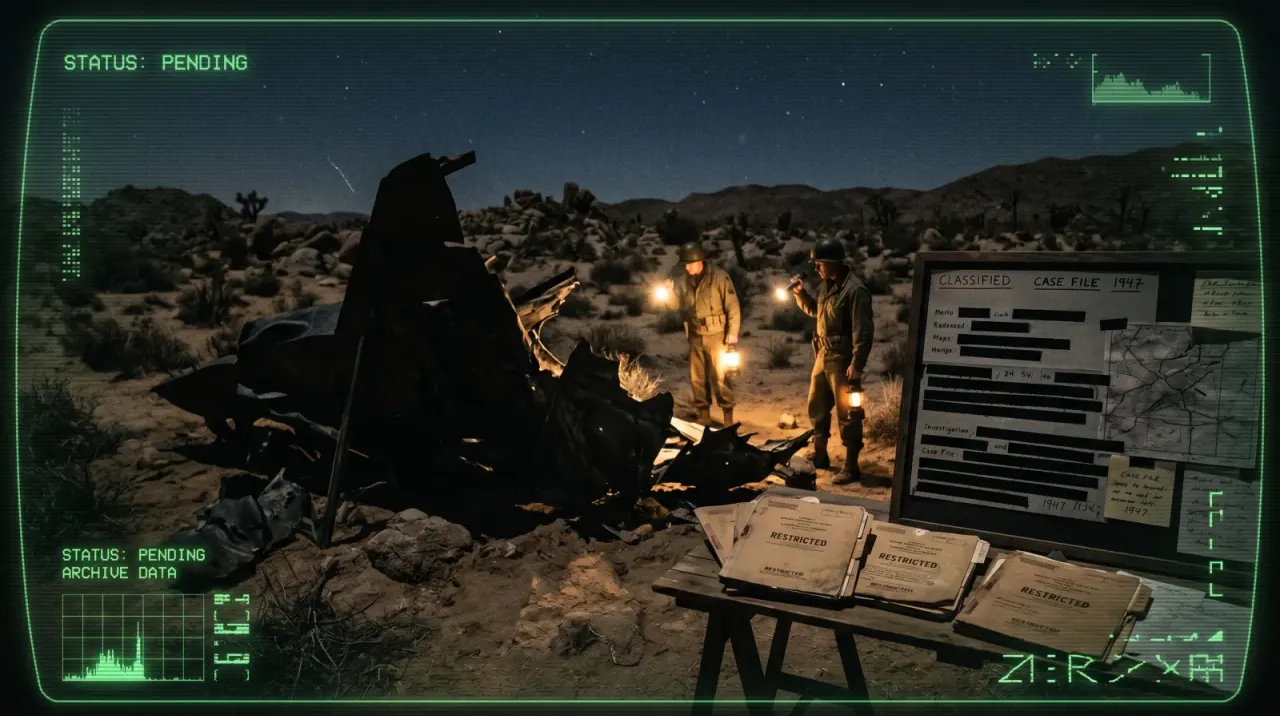
Project Blue Book was the U.S. Air Force's best-known public UFO investigation. It ran from 1952 to 1969 and reviewed more than 12,000 reports. Most cases received conventional explanations. A smaller number remained unidentified in the official record.
For civilians, Blue Book matters because it shows the difference between a sighting and an explanation. A report can be real, the witness can be sincere, and the cause can still be unclear. That is why documentation beats speculation.
Earlier programs, including Project Sign and Project Grudge, show the same institutional tension that still shapes UFO history: investigate the reports, manage public reaction, and avoid saying more than the evidence can support.
What changed with AATIP?
The Advanced Aerospace Threat Identification Program, widely known as AATIP, became public through major reporting in 2017. The story mattered because it moved UAP discussion away from fringe entertainment and into defense, aviation, sensor data, and congressional oversight.
The famous Navy videos did not prove origin. They did prove something more useful for the public conversation: trained observers and military sensors were part of the UAP record. That shifted the question from "why are people talking about this?" to "how should serious institutions evaluate it?"
That same discipline belongs to civilians. Do not turn every clip into a belief test. Ask what was observed, who observed it, what instruments were involved, what mundane explanations were checked, and what remains unknown.
What were UAPTF and AARO built to do?
The Unidentified Aerial Phenomena Task Force, or UAPTF, brought UAP reporting into a more formal national security frame. Its 2021 public assessment reviewed 144 government-sourced incidents and explained only one in the unclassified summary. The careful language mattered. It said little dramatically, but it admitted the problem was not imaginary.
AARO, the All-domain Anomaly Resolution Office, is the modern public-facing UAP office. Its work is contested, watched, praised, criticized, and filtered through politics. That is normal for a subject where evidence, classification, defense risk, and public trust collide.
The civilian lesson is simple: official reports rarely end the conversation. They define the next set of questions.
What did the congressional hearings change?
Congressional hearings made UAP a mainstream oversight issue. Witnesses, pilots, former officials, and lawmakers put claims into public settings where testimony could be questioned, archived, and compared. Some claims remain allegations. Some are tied to official records. Some require more evidence before they should be treated as fact.
That distinction is everything. A prepared civilian can follow hearings without turning every sentence into certainty. The practical habit is to separate four categories:
- Confirmed record: documents, public reports, official videos, and hearing transcripts.
- Credible testimony: statements made by people with relevant access or experience.
- Unverified claim: information that may matter but lacks public evidence.
- Interpretation: what commentators think the record means.
Keep those categories separate and you stay useful while everyone else floods the feed.
How should civilians use this history?
The history of government UFO programs should not make you paranoid. It should make you prepared. Public record moves slowly. Social panic moves fast. Your job is to stand between them with a clear head.
- Learn basic sighting documentation before you need it.
- Read original sources when major UAP stories break.
- Do not confuse secrecy with proof or debunking with explanation.
- Prepare your household for information shock, not just physical risk.
- Know your default role under stress so you can help instead of amplify noise.
Start with the First Contact briefing, then use how to prepare for alien contact to turn history into action.
Why this matters for first contact readiness
Government programs tell us one useful thing: uncertainty can last for decades. If civilians wait for perfect clarity before building basic protocol, they will always be late.
First contact readiness does not mean believing every UAP is alien. It means being able to receive major new information without panic, document personal encounters cleanly, protect people nearby, and make decisions while facts are incomplete.
That is where DISCLOSURE begins. Not with belief. With classification. Take the archetype quiz, claim your role, and move from spectator to prepared civilian.
- What to do if you see a UFO turns the record into field protocol.
- Readiness gives you a practical preparation score.
- UFO encounter psychology keeps your nervous system in the evidence chain.
Common questions
What government UFO programs are public record?
Project Blue Book, AATIP, UAPTF, and AARO are among the best-known public government UFO or UAP programs and offices.
Does government interest prove UFOs are alien?
No. Government interest proves the reports were serious enough to study. Origin is a separate question that requires evidence.
What should civilians do with UFO program history?
Use it to prepare judgment, documentation habits, and first contact readiness instead of reacting to every headline with panic or certainty.
See also For every program here with its date and source, from Project Sign in 1947 to PURSUE in 2026, open the Disclosure Ledger. The newest chapter is PURSUE, the 2026 UFO file releases at war.gov/UFO. Reference papers from the AAWSAP study were published in the sixth PURSUE release.