




Experiencer support starts with safety, not belief. If someone says they had a UFO encounter, missing time, close approach, or contact experience, the first job is to reduce harm and preserve clarity.
What support is not
Support is not automatic belief in every detail. It is also not ridicule. A useful support person can say: I believe you experienced something serious, and we will document it carefully.
That sentence protects dignity without forcing conclusions the evidence cannot carry.
The first hour
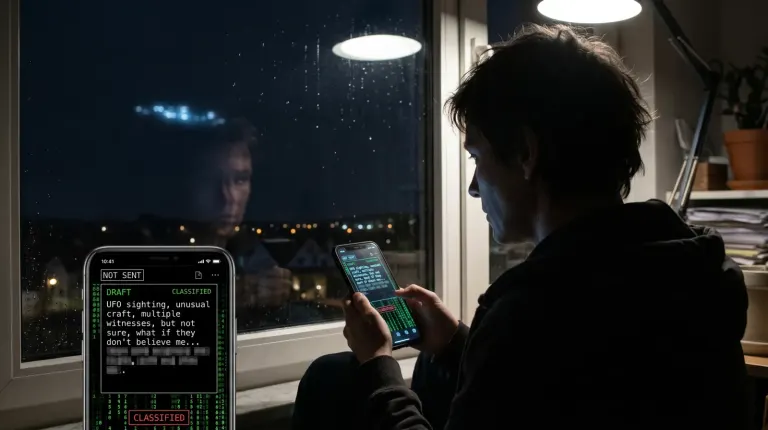
Move to a safe, quiet place. Check for injuries or medical symptoms. Note time, location, weather, witnesses, phone battery, vehicle status, and any missing interval. Save original media without filters or edits. Give someone who says they found an implant the same care: no attempt at removal, photographs with date and scale, and a qualified medical evaluation.
If the person is panicking, dissociated, physically hurt, or afraid they may harm themselves or someone else, seek immediate qualified help. Mystery does not outrank safety.
How to talk about it
Use calm language: sighting, event, experience, memory gap, physical symptom, witness account. Avoid turning the person into content. They are not a viral asset. They are a human being trying to restore command authority.
Common questions
What should I do after a UFO encounter?
Get safe, write notes, preserve original media, avoid adding details you are unsure about, and speak with a grounded person.
Should experiencers seek medical or mental-health support?
Yes if there are injuries, physical symptoms, panic, sleep disruption, memory distress, safety concerns, or daily-life impairment. Support does not invalidate the experience.
How do you support someone who says they had an encounter?
Listen without mockery, do not force belief, ask factual questions gently, encourage documentation, and recommend professional support if they are distressed or physically affected.