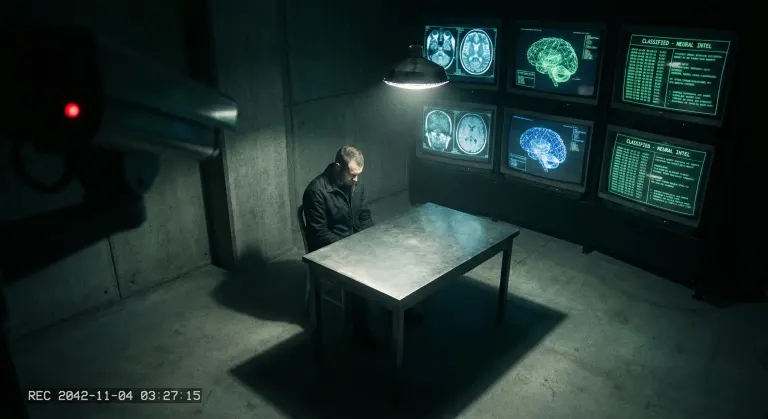

People freeze during UFO sightings because the brain hits a category problem. It sees motion, light, silence, scale, or behavior it cannot quickly explain, then pauses while the nervous system searches for a match.
That freeze does not mean the witness is weak. It means the body is trying to keep the person alive before the mind has a story. The danger is not the freeze itself. The danger is losing the first clean seconds of safety, evidence, and coordination.
Why does the body freeze?
The freeze response is part of the fight, flight, freeze, and fawn stress pattern. When a threat is obvious, the body can choose action quickly. When the event is ambiguous, the body may stop movement to gather more information.
A UFO or UAP sighting is built for ambiguity. It may be far away, silent, bright, fast, hovering, or moving against expectation. Your brain runs through known categories: aircraft, drone, satellite, meteor, balloon, reflection, weather. When none fit immediately, the system stalls.
That stall can feel like awe, fear, disbelief, or calm detachment. Different people will describe it differently. The mechanism is the same: attention narrows while the brain tries to make the unknown usable.
Why do people fail to record?
People often judge witnesses for not filming longer or not filming at all. That judgment is too easy. Under shock, phone tasks become less automatic than they seem. The person may stare because vision has priority. They may talk because social confirmation feels safer. They may fumble because fine motor control is degraded.
This is why preparation must be small. Do not build a ten-step plan. Build one reflex: open camera, record wide, say what you see. Simple survives stress.
How does freeze change memory?
Freeze can sharpen the central image and weaken everything around it. A witness may remember the object clearly but lose timing, direction, distance, and sequence. That does not prove deception. It proves stress was involved.
Write notes before replaying footage, reading comments, or arguing with other witnesses. Your first account should include what you saw, what you did not see, and what you are unsure about. Clean uncertainty is stronger than invented certainty.
What should you do in the first 30 seconds?
- Exhale. A long exhale tells the nervous system there is still command authority.
- Name your role. Say, "I am the observer." Roles beat panic.
- Record wide. Include rooftops, trees, horizon, mountains, power lines, or another fixed reference.
- Narrate facts. Time, direction, movement, sound, weather, and location.
- Hold distance. Do not chase, crowd, shine lasers, or move toward a landed unknown.
For the full field protocol, read what to do if you see a UFO. That file exists because stress is predictable. So is bad footage.
How your archetype can help
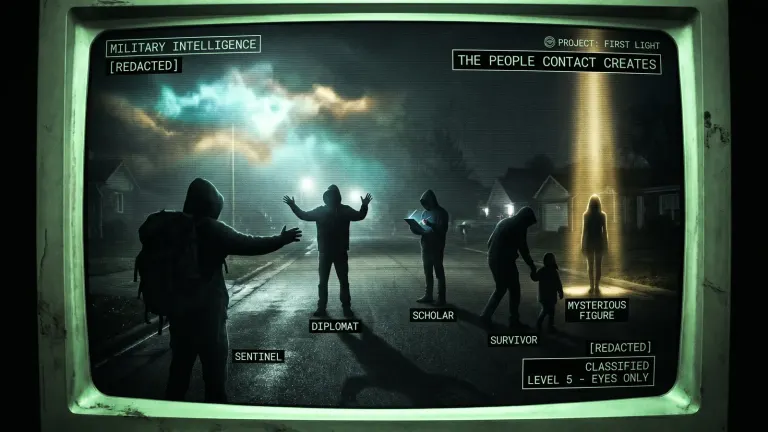
DISCLOSURE archetypes are stress roles. They help you predict which mistake you are most likely to make when the sky stops behaving normally.
- Sentinel: breaks freeze by protecting people, but may escalate too fast.
- Diplomat: breaks freeze by seeking communication, but may move too close.
- Scholar: breaks freeze by documenting, but may forget immediate safety.
- Survivor: breaks freeze by moving away, but may leave before collecting key facts.
- First Contact: breaks freeze by orienting toward engagement, but must stay humble and restrained.
Read the archetype index and take the classification quiz. The goal is not identity decoration. The goal is to know your failure mode before the unknown tests it.
How to train before a sighting
Run tiny drills. Open your camera from the lock screen. Film a moving plane for ten seconds with a fixed reference. Narrate a neutral observation without explaining it. Ask someone nearby to note time and direction. Stop before it becomes theater.
The prepared civilian does not become fearless. Fearless people do stupid things. The prepared civilian becomes useful while afraid.
Common questions
Why do people freeze during UFO sightings?
People freeze because the brain cannot quickly categorize what it is seeing. The nervous system pauses while it searches for a known threat or explanation.
Is freezing during a UFO sighting a bad sign?
No. Freezing is a normal stress response. The problem is staying frozen when evidence, safety, or witness coordination requires action.
How do you stop freezing during a UAP sighting?
Use a rehearsed script: breathe once, name your role, record wide, narrate facts, keep distance, and write notes immediately after the event.