
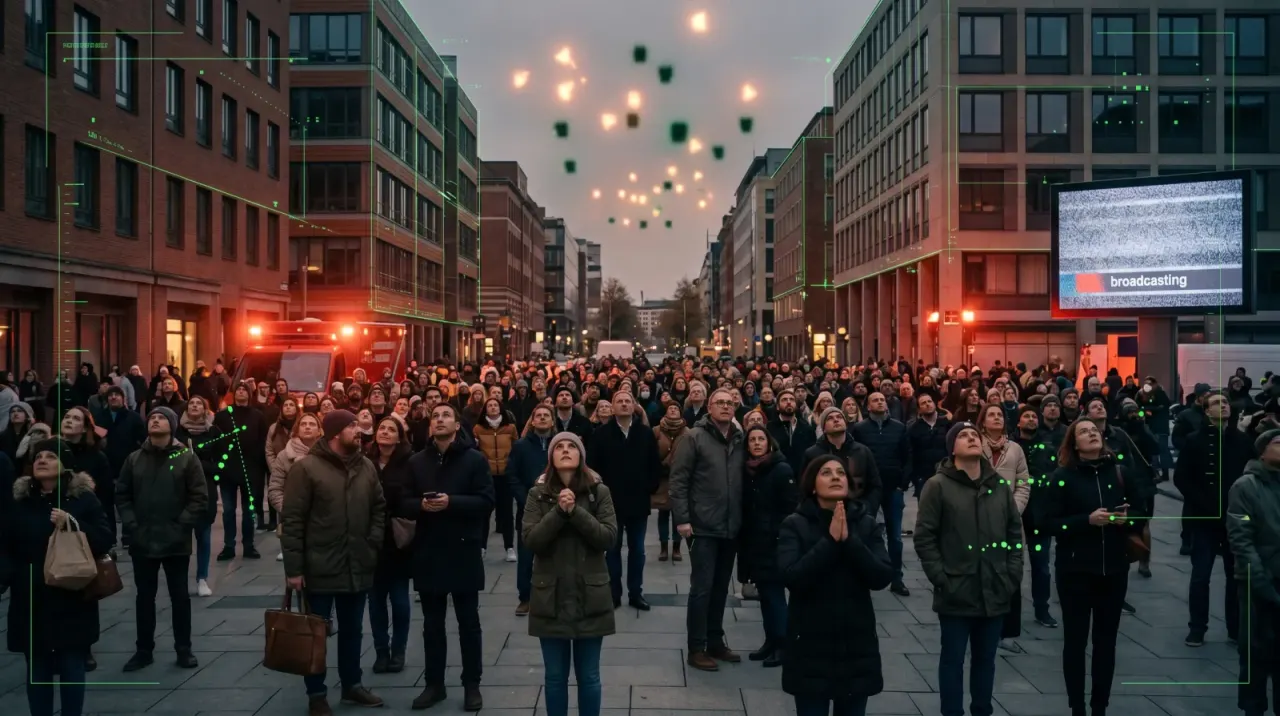
Mass panic is not guaranteed during first contact. Panic spreads when uncertainty, rumor, crowd density, and helplessness combine. Calm spreads when people have simple roles and trusted information.
Why crowds escalate
Crowds do not need confirmed aliens to become dangerous. They need uncertainty, noise, blocked exits, and contradictory claims. A strange object overhead can be less dangerous than the stampede beneath it.
That is why first-contact readiness begins with ordinary emergency behavior. Exit routes, calm voices, charged phones, and practical roles are not boring. They are civilization staying online.
The rumor problem
Rumors fill empty space. If officials are slow, influencers will sprint. If video clips are confusing, certainty merchants will sell certainty. Your job is to slow transmission: share verified facts, label unknowns, and refuse panic bait.
What to do in public
Get out of vehicle lanes. Avoid rooftops and railings. Keep distance from military, police, emergency crews, and any alleged contact site. If someone is in visible distress, help them sit, breathe, and contact support. If there are physical symptoms or injuries, seek medical help.
Common questions
Would first contact cause mass panic?
It could cause local panic or confusion, but panic is not automatic. Clear information, visible calm behavior, and practical roles reduce risk.
What should civilians do during a public first-contact event?
Avoid crowds, do not chase the event, preserve communication, document safely, help vulnerable people, and follow verified emergency instructions.
How do you reduce panic in a group?
Lower your voice, give one simple task, move people away from danger, correct rumors gently, and repeat what is known, unknown, and next.