




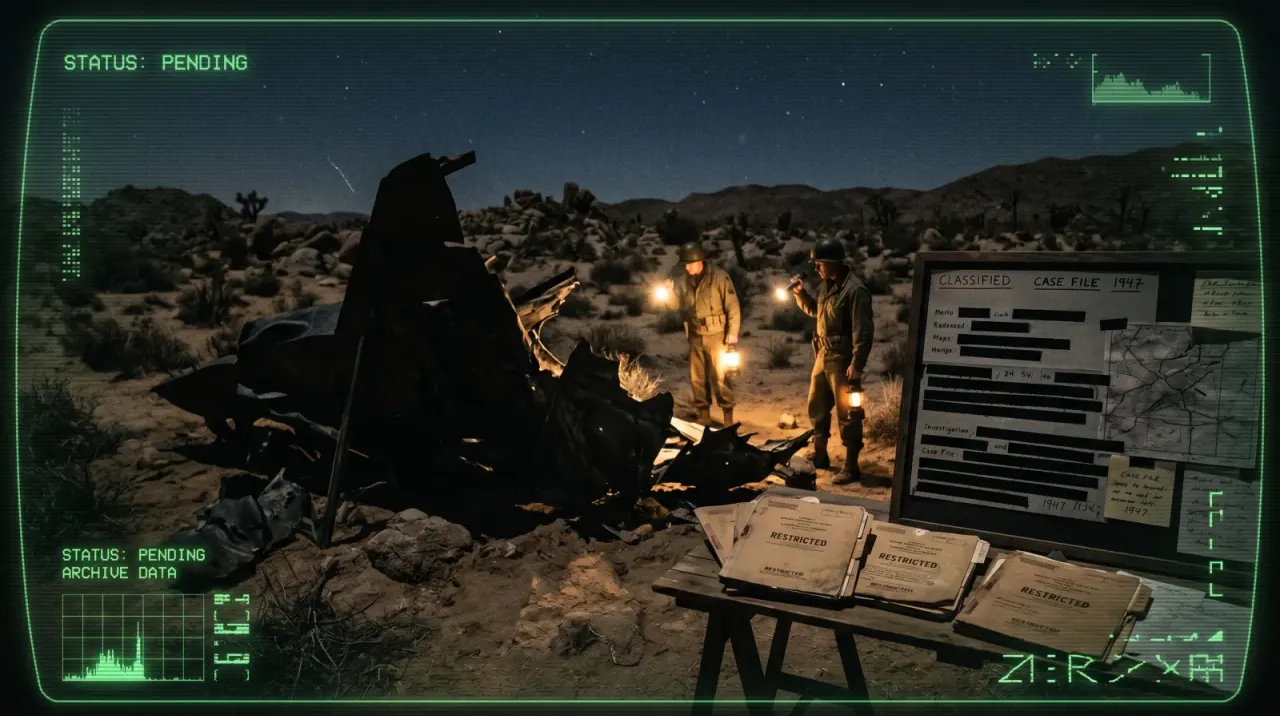



A reptilian alien threat assessment starts with one civilian rule: do not challenge. In encounter lore, Reptilian entities are reported as dominance-focused, physically imposing, and fast to read aggression, fear, and flight as signals.
This is not a claim of verified biology. It is a practical read of a recurring reported pattern. If a contact event ever matches this profile, your job is to lower escalation in the first seconds, create distance when safe, and preserve a clean record afterward.
Why this profile is ranked critical
Reptilian reports are ranked CRITICAL because they describe a narrow decision window. The witness sees size, posture, eye focus, and a sense of being evaluated. Then the encounter changes quickly based on the civilian's first move.
That is why this file is not about winning. It is about not feeding the wrong signal into a dominance frame. Human instinct says stare, shout, run, freeze, or prove you are not afraid. The field protocol says reduce the challenge signal and buy time.
The 10-second window
The exact number matters less than the principle. Early behavior frames the rest of the encounter. If your first signal is challenge, the encounter may answer in the same language. If your first signal is controlled non-threat, you keep more options alive.
Reported warning signs
- Dominance posture: witnesses describe height, stillness, and a sense that the entity is assessing rank.
- Hard eye focus: the encounter feels locked before anything moves.
- Pressure response: the civilian feels an urgent need to submit, flee, or challenge.
- Territorial context: reports often place the entity near restricted spaces, underground lore, craft, or guarded boundaries.
- Emotional distortion: fear spikes quickly and may become the main danger because it drives bad movement.
What not to do
- Hard stare. A fixed stare can read as a challenge in predator and dominance systems. Look, identify, then soften your gaze and angle your body.
- Aggressive voice. Do not yell threats, insults, prayers, or demands. Volume is not control. It is noise under stress.
- Sudden advance. Never step toward the entity to prove courage, get footage, or protect your ego. Distance is your friend.
- Panic running. Flight may be necessary if there is immediate physical danger and a clear route. Blind running through darkness is prey behavior and injury bait.
- Solo investigation. Do not return alone to the site because curiosity starts talking like destiny. Bring witnesses, light, location sharing, and normal safety discipline.
Civilian field protocol
- Stop the surge. One slow breath before action. Panic is a bad commanding officer.
- Angle your body. Do not square up. Turn slightly, hands visible, shoulders down.
- Reduce eye pressure. Look enough to identify. Do not hold a dominance stare.
- Use a low voice. If you speak, use short neutral words: "I am stepping back."
- Create distance. Step back slowly if the route is clear. Do not rush toward vehicles, lights, or figures.
- Document after safety. The record comes after distance, not before.
How this connects to your archetype
A Sentinel may want to protect the group by moving forward. Wrong instinct. Protect by controlling the perimeter and pulling people back. A Diplomat may want to speak. Keep it short and non-challenging. A Scholar may want footage. Get distance first. A First Contact outlier may feel pulled toward the event. That is exactly why role awareness matters.
Run the archetype quiz before the emergency part of your brain starts improvising. Then review the civilian archetype files so your role becomes a plan, not a personality badge.
Common questions
How dangerous are reptilian aliens in encounter lore?
This field guide ranks Reptilian reports as critical because they are commonly framed around dominance testing, rapid escalation, and severe consequences for aggressive or panicked first moves.
What should you do in a reptilian alien encounter?
Reduce challenge signals: hands visible, body angled, voice low, no hard stare, no sudden advance. Create distance when safe and document only after you are out of the danger zone.
What should you not do around a reptilian alien?
Do not act tough, hold a dominance stare, shout threats, rush forward for footage, or run blindly through unsafe terrain. Those behaviors can increase risk in the reported dominance framework.
Are reptilian aliens verified?
No verified biology is claimed here. This article treats Reptilian entities as a recurring reported pattern in encounter lore and focuses on practical civilian behavior under uncertainty.
Why does the first 10 seconds matter?
Reports often describe the early moment as the point where the encounter is framed. The useful lesson is to decide your posture before panic improvises one for you.