
Close encounter types sort a UFO or UAP event by how close it came, whether it left physical effects, and whether witnesses reported direct interaction. A distant light in the sky is one file. A silent object over the treeline is another. A landing trace or reported figure moves the event into heavier territory.
The phrase comes from astronomer J. Allen Hynek's classification system. The useful part for civilians is simple: the closer and more interactive the event becomes, the more disciplined your response needs to be.
This is not about escalating fear. It is about choosing the right field behavior. Record differently. Stand differently. Speak differently. Do not let the most important details vanish because everyone is arguing over the label.
What are close encounter types?
Close encounter types are a field shorthand for how intense a UFO sighting appears to be. They help witnesses, researchers, and curious civilians separate a simple observation from a possible physical incident.
The original Hynek system focused on the first three close encounters. Later UFO culture added CE4 and CE5. Those later labels are widely used, but they carry more speculation. Use them as reported categories, not proof.
- Nocturnal light: strange light in the night sky, usually distant.
- Daylight disc: object seen during daylight with visible shape or structure.
- Radar visual: sighting supported by radar or instrument contact.
- Close encounter: the event is near enough to demand immediate field discipline.
If you need the immediate response protocol before the definitions, read what to do if you see a UFO first.
What is a close encounter of the first kind?
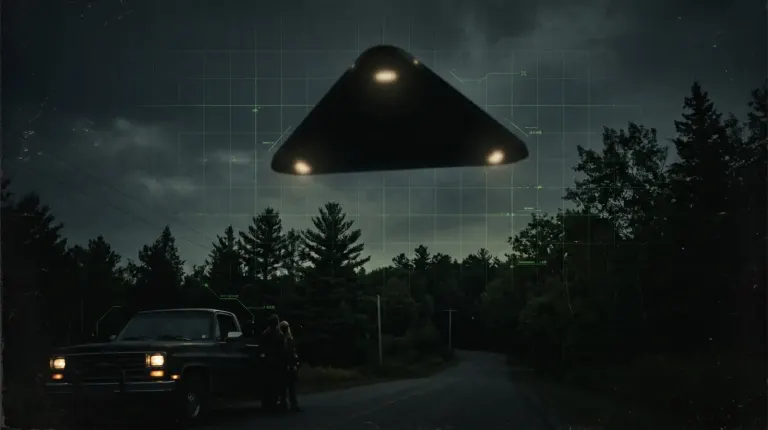
A Close Encounter of the First Kind, or CE1, is a nearby UFO or UAP sighting with no clear physical effect and no reported beings. Think low object, unusual motion, silent hover, structured shape, or a light close enough that normal sky explanations feel less likely.
For civilians, CE1 response is evidence discipline. Get wide video. Include rooftops, trees, mountains, power lines, vehicles, or the horizon. Say the time, direction, weather, and movement out loud. Do not zoom until context is captured.
Your mistake at CE1 is chasing the perfect close-up. A glowing object with no reference point becomes a floating dot. A wider clip with boring landmarks can become useful.
What is a close encounter of the second kind?
A Close Encounter of the Second Kind, or CE2, includes a reported physical effect. That might mean a ground mark, unusual residue, vehicle interference, radio disruption, animal reaction, heat, pressure, vibration, or a witness effect that appears tied to the event.
CE2 is where curiosity becomes liability. Do not touch debris, residue, scorched ground, liquid, metal fragments, or strange biological material. Photograph from multiple angles. Add a familiar object for scale only if you can do it without disturbing the scene.
If there is injury, fire, toxic exposure, traffic risk, or public danger, use normal emergency channels. Unknown does not cancel ordinary safety.
What is a close encounter of the third kind?
A Close Encounter of the Third Kind, or CE3, involves reported occupants, entities, figures, or beings associated with the object. The word reported matters. A witness statement is not the same as confirmation, but it is still a field file that should be handled carefully.
If multiple people see a figure, separate statements before the group builds one shared story. Ask each witness to describe shape, movement, distance, sound, lighting, and sequence without feeding them vocabulary.
The civilian rule is brutally simple: do not approach. Do not challenge. Do not perform. Maintain distance, reduce noise, keep exits clear, and document from safety.
What about CE4 and CE5?
CE4 usually refers to claimed abduction, missing time, or forced interaction. CE5 usually refers to human-initiated contact attempts through meditation, signals, lights, tones, or group protocols. These are not original Hynek categories. They are later extensions.
That does not mean you ignore them. It means you label them precisely. A person saying they lost time is a witness report. A person leading a skywatch meditation is an initiated-contact practice. Neither should be inflated into proof by language alone.
For missing-time concerns, use the dedicated missing time after a UFO sighting briefing. For psychology and shock response, read UFO encounter psychology.
How should civilians respond by level?
The level changes the job.
- CE1: observe, record, narrate, preserve original footage.
- CE2: expand the scene, document effects, protect traces, avoid contamination.
- CE3: protect distance, reduce crowd behavior, gather separate witness accounts.
- CE4: stabilize the witness, write the timeline, avoid leading questions.
- CE5: document the setup, separate intention from result, avoid overclaiming.
This is where archetype awareness helps. A Sentinel may move forward to control the perimeter. A Scholar may forget people while chasing data. A Diplomat may try to engage too soon. A Survivor may leave without notes. The archetypes index shows the failure mode before stress chooses it for you.
What should you document?
Document the facts that survive skepticism. Time. Location. Direction. Duration. Weather. Sound. Witness positions. Device behavior. Animals. Traffic. Nearby drones, aircraft, satellites, fireworks, launches, or weather events. What changed before, during, and after?
For CE2 and higher, add scene protection. Photograph from outside the area first. Record footprints, tire tracks, witness movement, and anything that may have contaminated the site. If you touch the scene before documenting it, you become part of the evidence problem.
Common questions
What are the close encounter types?
Close encounter types are field categories used to describe how near, physical, or interactive a UFO or UAP event appears to be.
What is the difference between CE1, CE2, and CE3?
CE1 is a nearby sighting without physical effects, CE2 includes traces or interference, and CE3 includes reported beings or occupants.
Are CE4 and CE5 official Hynek categories?
No. CE4 and CE5 are later popular extensions. Use them carefully and separate reported claims from confirmed evidence.
What should civilians do during a close encounter?
Keep distance, record wide context, protect witnesses, avoid touching traces or debris, and write notes before interpretation takes over.
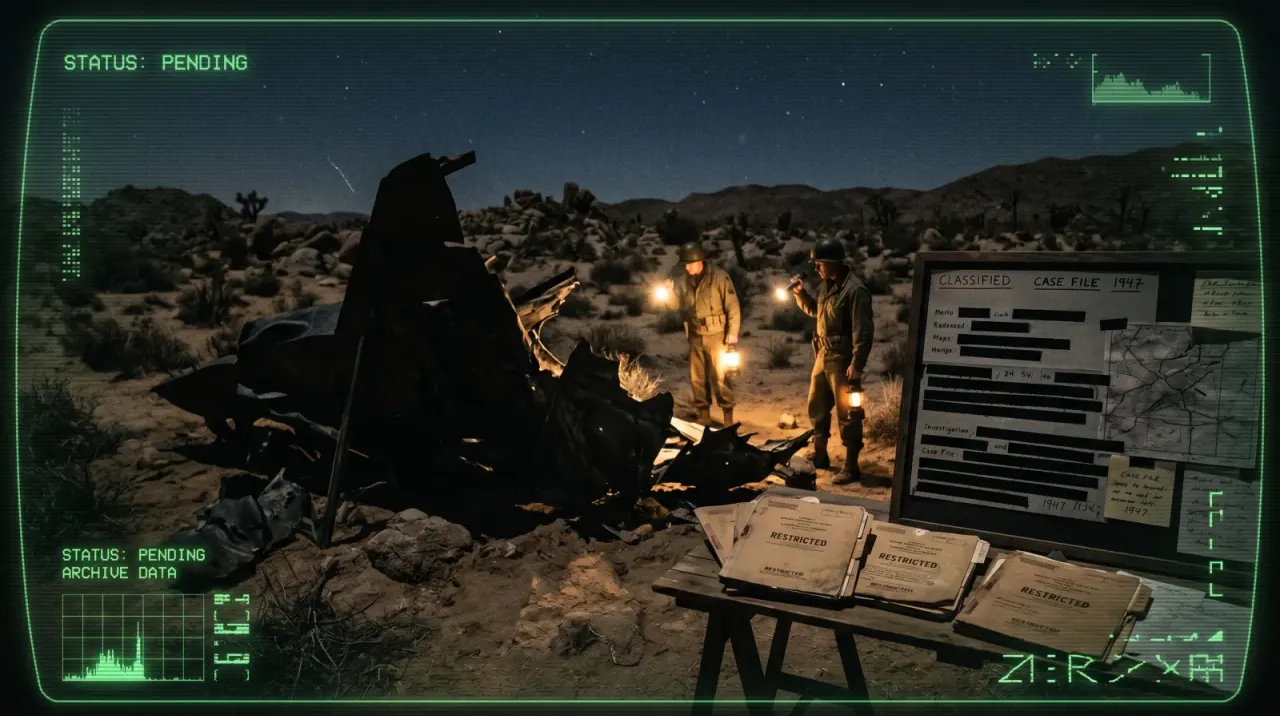
See also CE1 to CE5, the Hynek scale and related terms are collected in the glossary. Real reports at each level, with their official findings, are in the UFO case files. The best-known group report of a close encounter involving children is the Ariel School incident.