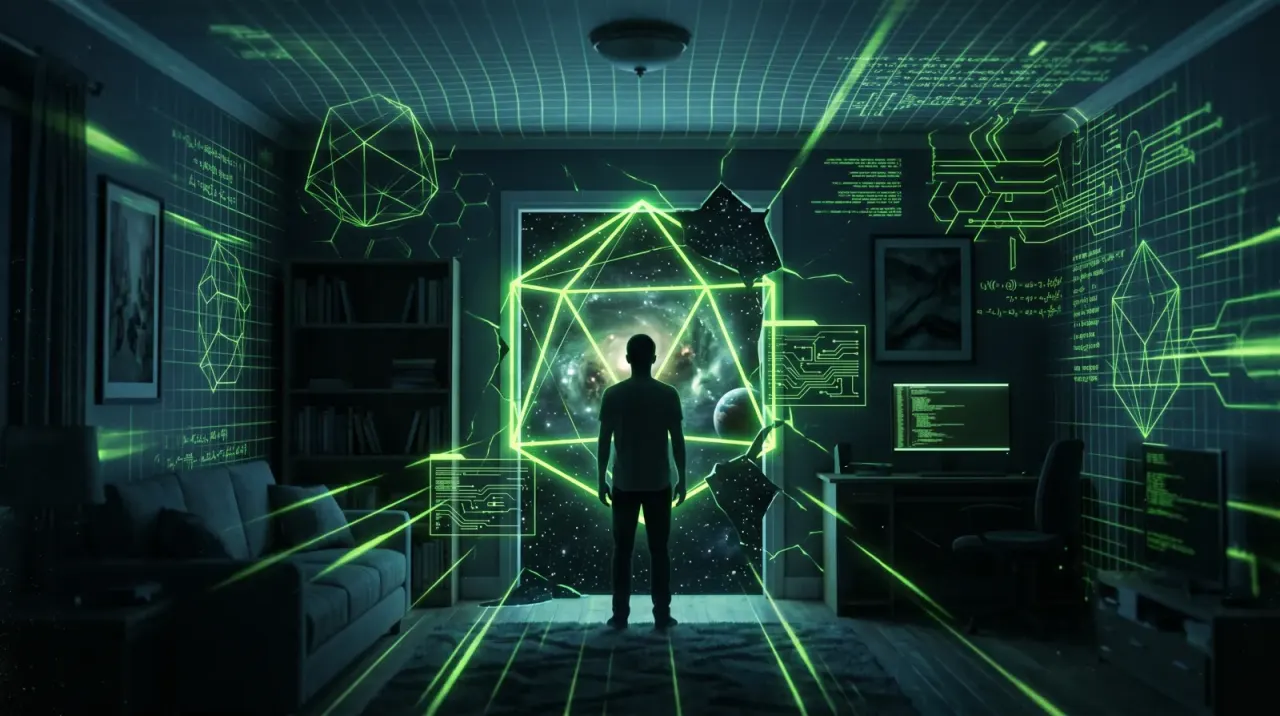
The interdimensional hypothesis claims that some non-human intelligence reports may involve adjacent dimensions, layered reality, or boundary effects instead of visitors crossing ordinary space from another star. It is not proven. It is a model people use when a report seems to behave less like an aircraft and more like a break in the rules.
The civilian value is not believing the strangest version. The value is learning what to do when an event does not fit your categories: slow down, protect the record, keep people calm, and avoid turning confusion into certainty.
Why do people ask about the interdimensional hypothesis?
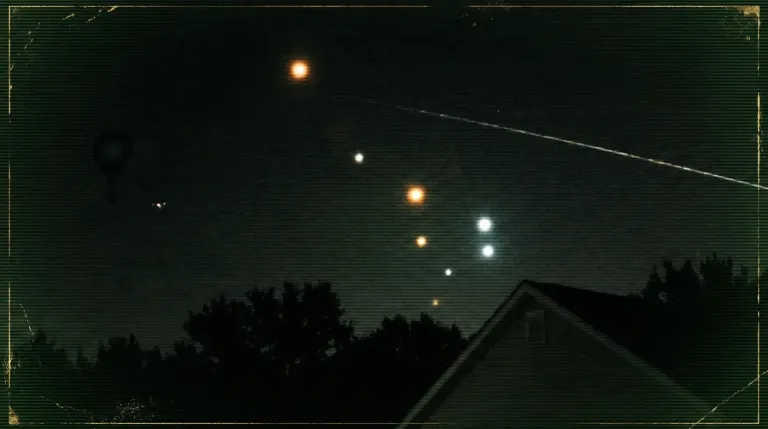
People ask about this theory because some contact reports feel different from normal travel stories. Objects appear without a visible path. Figures seem to enter bedrooms without doors. Time feels compressed. Witnesses describe silence, vibration, paralysis, impossible geometry, or the sense that something stepped sideways into the room.
Those details do not prove an interdimensional event. They do explain why the model exists. When a story does not behave like a machine moving through air, people reach for boundary language: portals, layers, dimensions, frequencies, membranes, or reality overlap.
What the model claims
The strongest version says the visitors are not far away. They are adjacent. Distance may not be measured in miles. It may be measured by state, frequency, phase, perception, or some physical layer civilians cannot detect yet.
A weaker version says human witnesses may interpret unfamiliar technology as dimensional because the effects look impossible from the outside. That is an important distinction. A door you do not understand is not automatically another universe. It may be a technology hiding the hallway.
What it would change about behavior
If an interdimensional model were ever relevant, the first response would not be heroics. It would be boundary control. People would need to avoid crowds forming around the event, stop anyone from touching objects or thresholds, keep children and pets away, and document without escalating.
It would also change how you think about safety. A distant craft is one kind of problem. A boundary event near a house, road, school, or hospital is another. The correct civilian posture is calm distance, clean records, and no unnecessary signal back into the unknown.
What this means for first contact readiness
This hypothesis trains humility. You do not need to know the whole map to behave well at the edge of it. Stay calm. Preserve evidence. Protect the vulnerable. Do not let awe become obedience.
In Disclosure terms, the Scholar protects the record, the Sentinel protects the boundary, the Diplomat keeps witnesses from escalating each other, and the First Contact archetype resists turning mystery into a personal mythology.
Common questions
What is the interdimensional hypothesis?
The interdimensional hypothesis is the idea that some reported non-human intelligence encounters may involve adjacent dimensions, layered reality, or boundary effects rather than travel from a distant planet.
Is the interdimensional hypothesis proven?
No public evidence proves the interdimensional hypothesis. It should be treated as a speculative model used to think about unusual reports, not verified fact.
Why do people connect UAP to dimensions?
Some reports describe sudden appearance, disappearance, missing time, impossible movement, or reality-distortion language. Those features make some researchers and experiencers consider models beyond simple space travel.
What would the model change for civilians?
It would make boundary discipline, calm observation, witness separation, and delayed interpretation more important than chasing, signaling, or inventing certainty.
How does Disclosure use this theory?
Disclosure treats it as a high-impact readiness scenario for staying calm when ordinary categories fail.