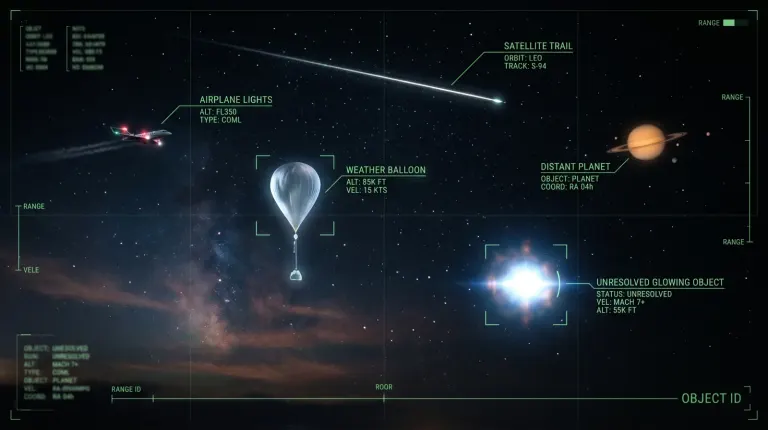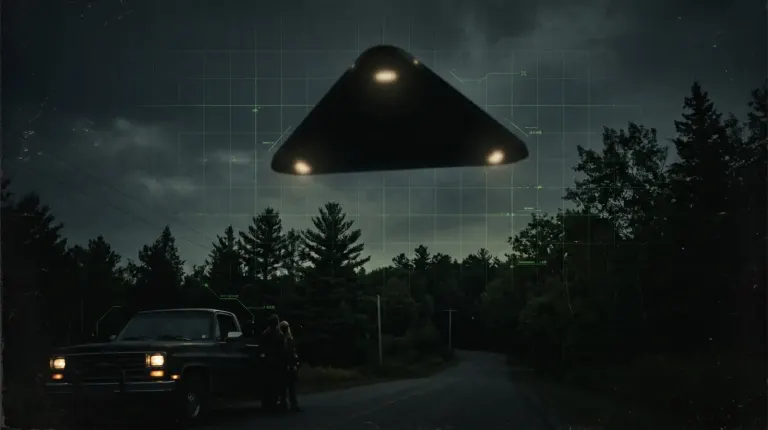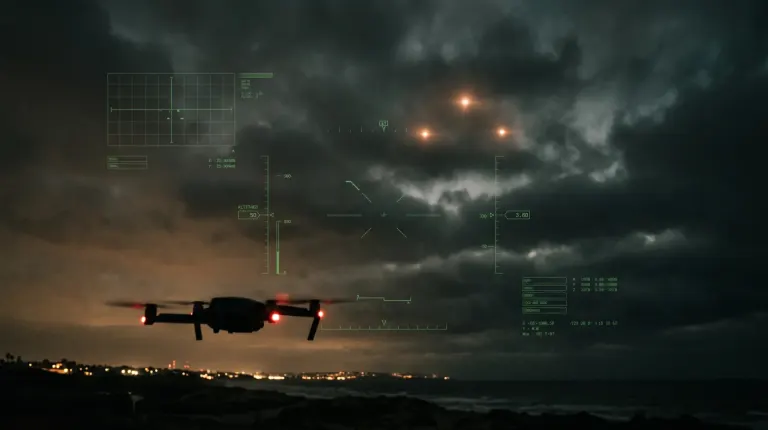


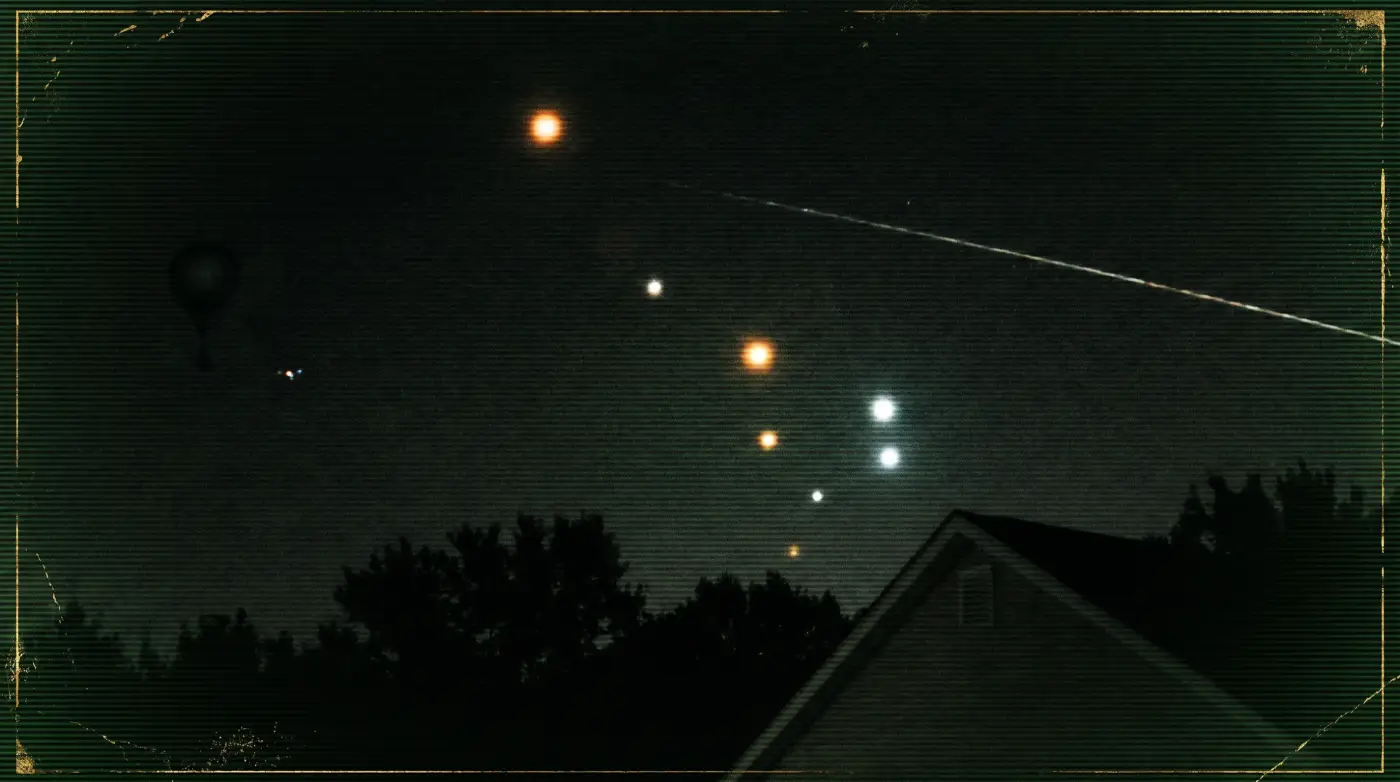
What are orbs in the sky? In plain terms, they are round or glowing lights people notice overhead and cannot immediately identify. Some are aircraft, drones, satellites, planets, balloons, weather effects, camera artifacts, or insects close to the lens. Some stay unidentified because the evidence is too thin or the motion is genuinely unusual.
The important move is not to decide too early. Orb describes appearance, not origin. A calm witness treats the light as a field event: record context, preserve evidence, check ordinary explanations, and avoid turning uncertainty into a claim.
This guide gives you the civilian filter. It will not tell you every orb is mundane. It will not tell you every orb is non-human. It will show you how to document the sighting well enough for the next question to matter.
Why do people see orbs in the sky?
People ask about orbs because the sightings feel direct. A sphere of light is simple to see and hard to explain under stress. At night, distance collapses. A nearby insect can look like a distant object. A distant aircraft can look stationary. A bright planet can look like it is following you when you move.
That does not mean witnesses are foolish. It means the sky is a hostile interface. Darkness, zoom, adrenaline, cloud layers, glass, phone sensors, and social pressure can all distort the file.
For the immediate field response, keep what to do if you see a UFO open as the base protocol.
Common explanations for sky orbs
Start with the boring list. If the sighting survives the boring list, it becomes more interesting.
- Aircraft: landing lights can look like bright orbs when an aircraft faces you.
- Drones: small lights can hover, change direction, and vanish behind trees or buildings.
- Satellites: steady lights can cross silently, flare, dim, or appear in groups.
- Planets and stars: bright points can appear to pulse through atmosphere or camera shake.
- Balloons and lanterns: wind-driven objects can drift silently and glow or reflect light.
- Weather: fog, ice crystals, lightning, clouds, smoke, and reflections can create strange light behavior.
- Camera artifacts: lens flare, dust, moisture, insects, autofocus, and digital zoom can create orb-like shapes.
When is an orb sighting worth documenting?
Document it when the behavior is unusual, when there are multiple witnesses, when the event lasts long enough to capture context, or when the object appears near aircraft, infrastructure, people, animals, or possible debris.
Useful indicators include sudden acceleration, sharp direction changes, hovering without obvious drone behavior, repeated patterns, silence despite apparent proximity, multiple angles, or environmental effects. None of those prove origin. They tell you the file deserves discipline.
Use the UFO evidence checklist before sharing. It helps separate an interesting observation from a weak clip.
How should you record an orb?
- Go wide firstFrame the orb with horizon, treeline, rooftops, mountains, power lines, or other fixed points. A floating dot alone is fragile evidence.
- Lock your bodyBrace elbows, lean on a wall, or rest the phone against a surface. Camera shake can make ordinary motion look impossible.
- Narrate factsSay time, direction, location, weather, sound, movement, and witness count. Do not narrate the conclusion.
- Capture surroundingsFilm nearby aircraft, clouds, moon position, streetlights, windows, traffic, animals, and people reacting. Context is the evidence multiplier.
- Save before postingKeep the original file untouched. Social platforms compress the file and often strip useful details.
How do you avoid bad orb evidence?
Do not over-zoom until you have wide context. Do not stop filming the moment the light disappears. Do not add music or captions to the evidence copy. Do not let comments write your memory for you.
If others saw it, separate accounts first. Ask each person to write direction, timing, color, sound, movement, and what they thought it might be. Then compare. The difference between accounts can be useful.
If you decide to file, use how to report a UFO sighting and keep the language sober. Orb is a description. Unknown is a status. Origin is a conclusion you may not have earned yet.
Do orbs matter for first contact readiness?
Yes, but not because every orb is extraordinary. Orbs matter because they train the exact skill civilians need in any strange sky event: stay calm, watch carefully, document cleanly, resist panic, and know when to escalate.
The First Contact briefing turns that habit into a wider protocol. The archetypes index explains why different people react differently under uncertainty. The classification quiz shows your default role before the next light appears.
- UFO evidence checklist shows what to capture before the clip leaves your phone.
- UFO encounter psychology explains how stress changes perception.
- Readiness turns the orb filter into household response discipline.
Field FAQ
Are orbs in the sky always UFOs?
No. They are unidentified only until enough context exists to identify or narrow them. Orb is a visual description, not proof.
Can phones create orb artifacts?
Yes. Lens flare, dust, moisture, insects, autofocus, digital zoom, and compression can all produce orb-like shapes or movement.
Should I report an orb sighting?
Report it if you have useful details, multiple witnesses, unusual movement, or a safety concern. Immediate hazards go to local authorities. Non-emergency sightings can go through civilian reporting channels.
Common questions
Are sky orbs always UFOs?
No. An orb-like light is a shape description, not an identification. Treat it as unidentified until context, motion, timing, location, and ordinary explanations are checked.
How should I record an orb sighting?
Record wide context first, include the horizon or fixed objects, narrate time and direction, preserve the original file, and write notes before comparing stories or posting online.
When should an orb sighting be reported?
Report it when you have enough detail to document the event or when there is a safety concern. Immediate hazards go to local authorities. Non-emergency sightings can be logged through civilian reporting channels.
See also A bright light that hangs still is often Venus or Jupiter; the sky identifier shows which planet was there that night. Military orb reports from 2008 to 2025 were published in the third PURSUE release. If the orb is orange, check lanterns, flares or a planet first. Green orbs have their own short list in green lights in the sky.