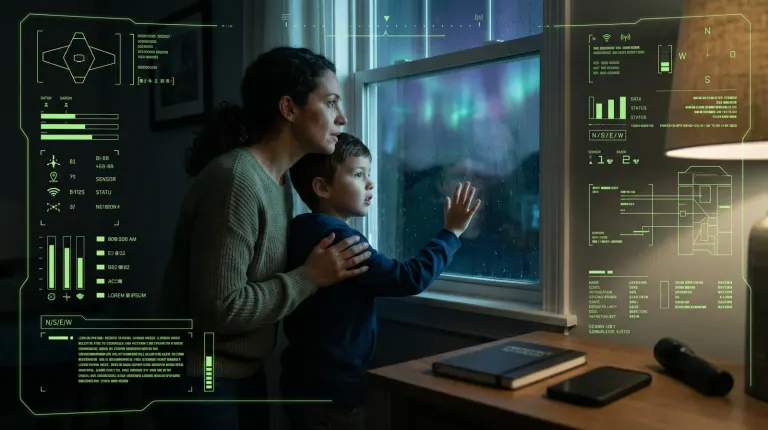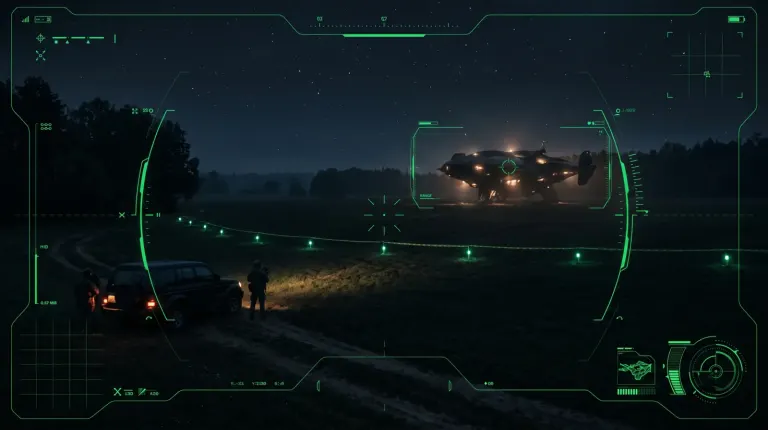



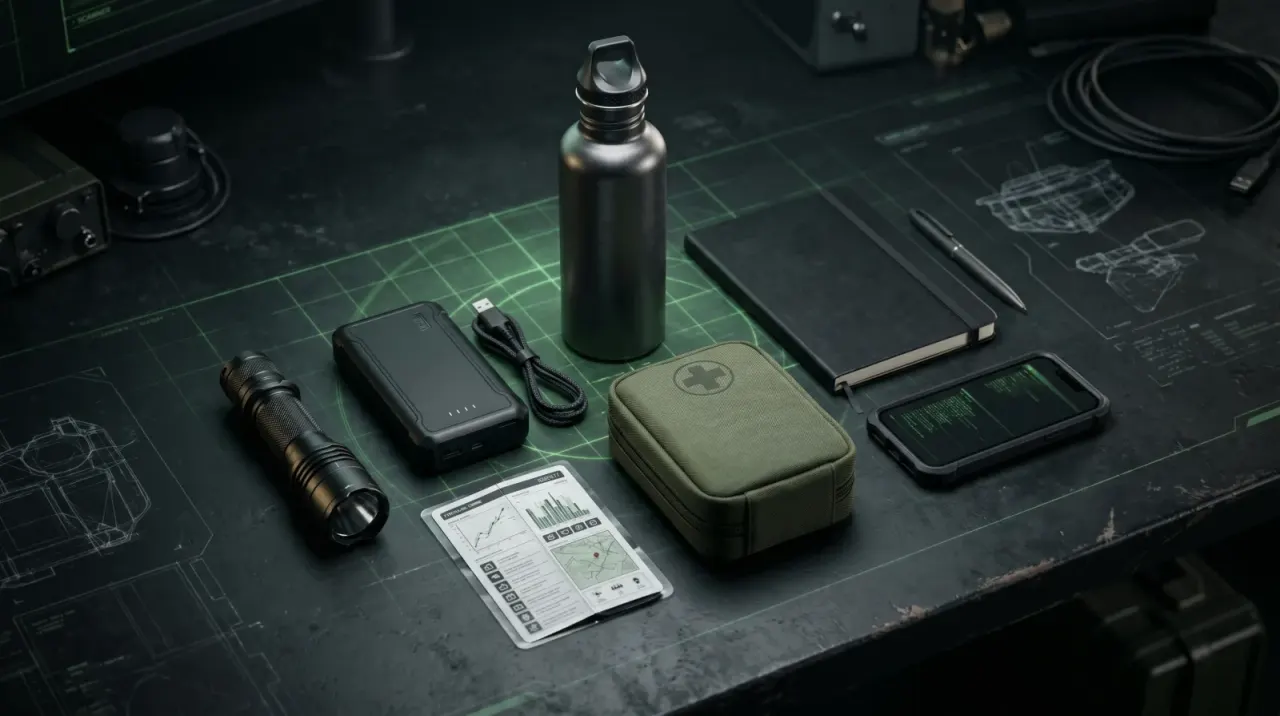
A UFO contact emergency kit should not look like bunker cosplay. It should look boring, practical, and easy to grab: light, power, notes, first aid basics, water, household contacts, and tools for preserving evidence.
People ask about this because first contact preparation feels huge. Bring it down to one bag. If the power flickers, phones die, roads jam, or witnesses scatter, the kit keeps the household functional.
This is not a promise that contact will happen. It is the same logic as a fire drill, roadside kit, or storm bag. Prepare the basics before surprise starts making decisions for you.
What the kit is actually for
The kit has four jobs: keep people visible, keep phones alive, keep notes clean, and keep household needs from hijacking attention. If those four jobs are covered, you are already ahead of most witnesses.
Do not build the kit around exotic assumptions. Build it around normal failure points: dead batteries, lost pens, panicked family members, poor lighting, missing medication, compressed video, and no one knowing who to call.
For the bigger civilian frame, pair this with the readiness file and First Contact briefing.
The five layers of a civilian contact kit
- LightUse a flashlight or headlamp, not only a phone light. Add spare batteries and a small reflective marker or glow stick for visibility.
- PowerKeep a charged power bank, cables for household phones, and a small wall charger. A dead phone ends documentation fast.
- NotesPack a notebook, two pens, printed incident sheet, and local map. Paper still works when apps fail or hands shake.
- Household basicsAdd water, compact snacks, essential medications, first aid basics, ID copies if appropriate, pet lead, and emergency contact numbers.
- Evidence workflowWrite one rule on the incident sheet: original files get saved before cropping, filtering, messaging, or posting.
What should not go in the kit?
Do not pack weapons for a speculative contact scenario. Do not pack anything that makes you more likely to approach an unknown object, trespass, confront strangers, or escalate a crowd. The kit should make you calmer, not bolder.
Skip novelty gear that performs for the internet but fails in the field. If an item does not help with light, power, notes, basic care, communication, or evidence preservation, it probably does not belong in the primary bag.
Where should you keep it?
Keep the main kit near the household exit or calm point. Not buried in a garage. Not under holiday decorations. Not in a closet only one person understands. A kit that cannot be found under stress is decoration.
- Home kit: near the exit, readiness shelf, or family meeting point.
- Vehicle mini-kit: power bank, cable, notepad, pen, flashlight, water, and incident card.
- Travel version: notebook, charger, power bank, local address, and medication basics.
If you want a scenario-first version, read how to prepare for alien contact. If you want a field evidence path, read UFO evidence checklist.
How does the kit connect to your role?
A kit does not replace judgment. It reveals it. The person who grabs light may be a Sentinel. The person writing timestamps may be a Scholar. The person calming the room may be a Diplomat. The person securing exits may be a Survivor. The person who can coordinate without ego is the one everyone needs.
Run the classification quiz before stress assigns roles badly. Then use the readiness file to decide where the kit lives, who checks it, and how the household uses it.
- Intel index keeps the public briefing archive in one place.
- Alien survival guide is the broader scenario map, with uncertainty kept intact.
- What to do if you see a UFO covers the live sighting sequence.
- UFO sighting family protocol turns the kit into household roles.
Common questions
What should be in a UFO contact emergency kit?
Include a flashlight, spare batteries, power bank, charging cables, notebook, pen, first aid kit, water, snacks, medications, IDs, local map, whistle, pet lead, and original-evidence storage plan.
Is a UFO emergency kit the same as a survival kit?
No. Treat it as a calm readiness kit. It supports light, power, communication, notes, basic first aid, household needs, and evidence preservation.
Where should I keep a first contact emergency kit?
Keep a small kit near the main exit or household meeting point, with a second power and note kit in the car if you travel often.
How often should I update the kit?
Check batteries, power banks, medication dates, water, snacks, printed contacts, and pen function once a month or after each use.