


One rule keeps a sighting credible when you talk about it: lead with what you observed, not what you think it means. The faster you jump to a conclusion, the easier it becomes for people to dismiss the whole file.
A credible sighting report is calm, specific, and slightly boring. That is good. Boring details survive scrutiny. Dramatic certainty collapses under basic questions.
You do not need to convince everyone. You need to protect the record, respect witnesses, and keep your language clean enough that useful people can engage with it.
Why do people dismiss UFO sightings?
People dismiss UFO sightings for three reasons: stigma, weak evidence, and bad witness language. You cannot control stigma. You can control the other two.
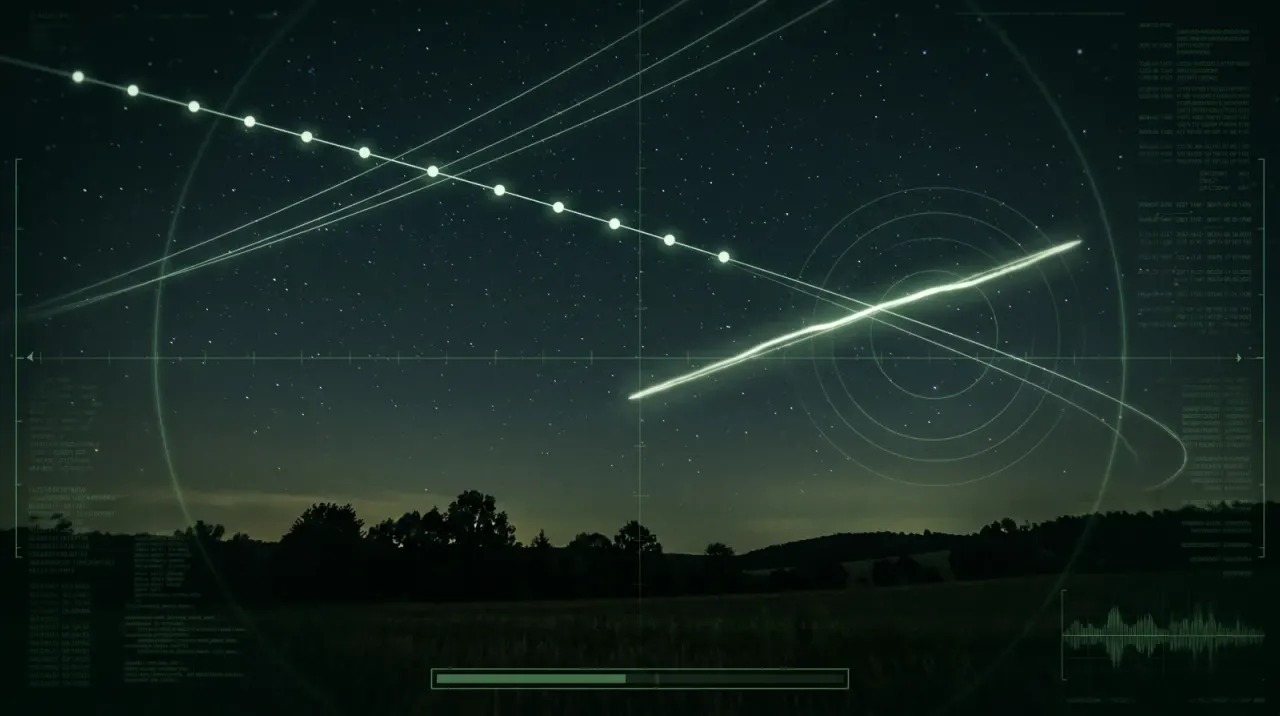
If you open with "I saw an alien ship," the listener has to accept your conclusion before they hear your evidence. Most will not. If you open with "At 9:42 facing northwest, I saw a silent light move from horizon to overhead in eight seconds," the listener has a file to examine.
The goal is not to sound less excited. The goal is to sound more useful.
What should you say first?
Use a field statement. Keep it short enough to survive retelling.
That last sentence matters: I have not identified it yet. It keeps the door open without pretending you already solved it.
Should you say UFO or UAP?
Use the word your audience will understand, then define it if needed. UFO means unidentified flying object. UAP means unidentified anomalous phenomenon. UAP is the current official term in many government and media contexts because not every report is a simple flying object.
In a public post, you can write: "UFO/UAP sighting report." That covers the everyday word and the official term without turning the first sentence into a vocabulary lesson.
Do not hide behind jargon. If you mean a light, say light. If you mean a triangular object, say triangular object. If you saw no beings, do not imply beings.
Who should you tell first?
Tell one reliable person first, not the whole internet. Choose someone who will help you preserve details instead of performing disbelief or excitement.
- Nearby witness: ask for their account before sharing yours.
- Trusted contact: send a calm summary and original media backup.
- Reporting channel: submit specifics only after your first notes are written.
- Public audience: post later, after you have separated facts from interpretation.
If the sighting involved immediate danger, fire, injury, aviation risk, hazardous debris, or traffic risk, use ordinary emergency channels first. A strange event does not suspend real-world safety.
How do you post about a UFO sighting online?
Post the calm version. The internet will try to turn your sighting into content, combat, or comedy. Do not help it.
- Upload a copy, not your only original file.
- State device model, location area, direction, time, and weather if safe to share.
- Mention what you checked: planes, drones, satellites, fireworks, weather, launches, reflections.
- Do not add music, filters, captions over the object, or aggressive zoom cuts to the evidence version.
- Separate your speculation into a clearly labeled section.
If you need the field protocol before publishing, use what to do if you see a UFO.
How do you handle jokes and skeptics?
Do not fight every joke. Stigma feeds on overreaction. A clean reply works better:
"I do not know what it was. I preserved the original video and wrote the details down. If you see a normal explanation, send it."
That sentence keeps you credible because it invites identification without surrendering the observation. Skepticism is useful when it tests the file. It becomes useless when it tries to humiliate the witness.
If the experience shook you, read UFO encounter psychology. Witness response is part of the event, not an embarrassment after it.
What if the sighting included missing time or a close encounter?
Then slow down. Do not compress a complex report into a dramatic headline. If there was physical effect, reported presence, or memory disruption, classify those layers separately.
Use close encounter types explained for the encounter level and missing time after a UFO sighting for timeline gaps. A layered report is more credible than one overloaded claim.
What is your role when people are listening?
After a sighting, your social role matters. You can make the room calmer or stranger. You can protect witnesses or turn them into spectacle. You can invite evidence or start a belief war.
DISCLOSURE uses archetypes because people communicate differently under pressure. Sentinels sound certain. Scholars sound clinical. Diplomats soften too much. Survivors say too little. First Contact profiles may engage before the room is ready. The archetypes file helps you know the habit before it leaks into your report.
When in doubt, say less and document more. That is not weakness. That is field discipline.
Common questions
How do you talk about a UFO sighting without sounding unreliable?
Lead with observed facts: time, place, direction, duration, movement, sound, witnesses, and what you ruled out. Avoid claiming more than you saw.
Should I say UFO or UAP?
Use whichever your audience understands. UAP is the more current official term, but the important part is precise witness language.
Should I post my UFO sighting online?
Only after preserving original media and notes. Post a calm summary, not a dramatic conclusion, and keep an unedited copy private.
What should I avoid saying after a sighting?
Avoid certainty you cannot support, jokes that contaminate witness memory, and claims about aliens or craft occupants unless that is exactly what was observed.