

The NASA UAP report matters because it pulled unidentified anomalous phenomena into a scientific data conversation. The report did not announce extraterrestrial life. It said the current evidence is too limited, fragmented, and low quality to answer the biggest questions responsibly.
That may sound less dramatic than a disclosure headline. It is more useful. A serious civilian should want better data, cleaner reporting, less stigma, and less certainty theater.
What was the NASA UAP report?
NASA commissioned an independent study team to examine how the agency could contribute to the study of UAP. The final public report, released in 2023, focused on data, methods, reporting standards, and the role NASA could play without duplicating military or intelligence functions.
The report’s most important message was not hidden in a dramatic claim. It was methodological: the public needs better observations before it can make better conclusions.
Why do people ask about this?
People ask about the NASA UAP report because NASA carries scientific legitimacy. If NASA studies UAP, the subject feels less fringe. If NASA does not confirm aliens, some people treat that as dismissal. Both reactions are too crude.
The report’s actual value is the middle lane. It says the topic can be studied without superstition, ridicule, or premature certainty. That is exactly the lane civilians need during disclosure pressure.
What did NASA say about data?
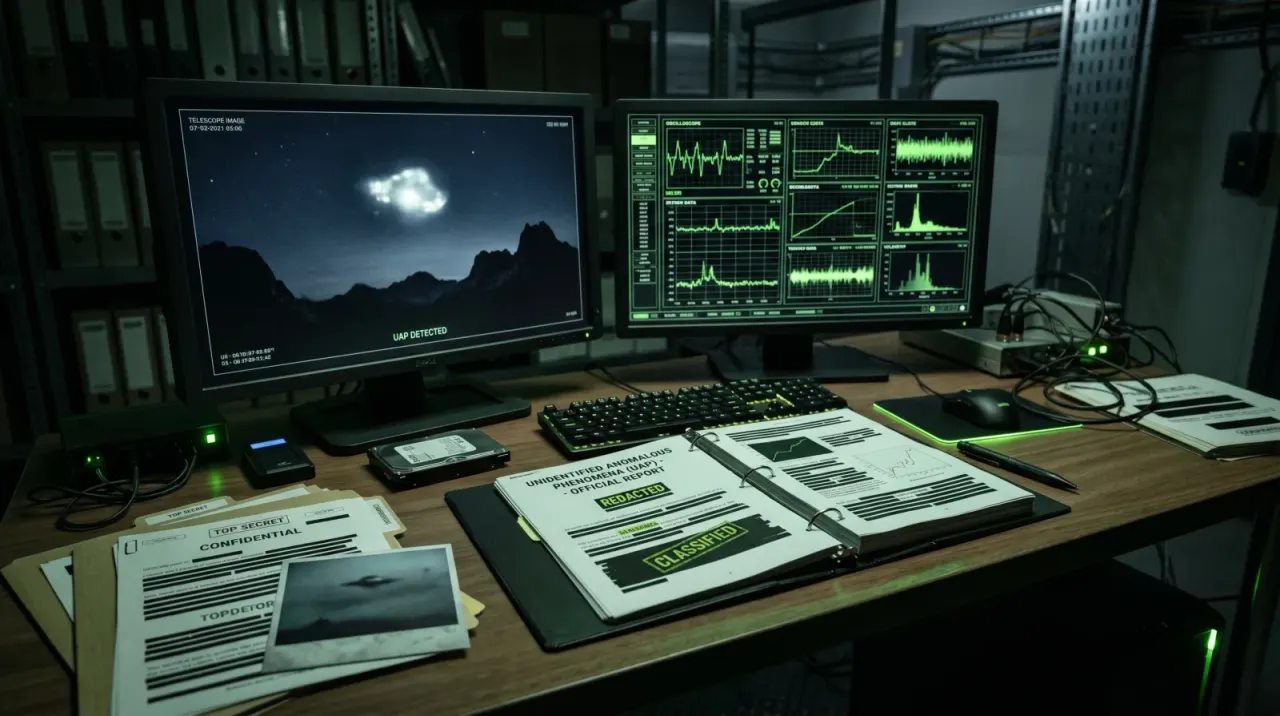
NASA emphasized that many UAP reports do not include enough calibrated, repeatable, multi-sensor data to support firm conclusions. A phone video, a pilot memory, and a sensor track can matter, but each has limits.
Better data means time, location, direction, sensor metadata, environmental conditions, image quality, witness notes, and chain of custody. Without that context, even a strange object can collapse into a rumor once it hits social media.
Did NASA say UAP are aliens?
No. The report did not claim UAP are extraterrestrial or non-human. It also did not say every case is solved. It framed the current public evidence as insufficient for extraordinary conclusions.
That distinction matters. Lack of proof is not proof of nothing. It is a demand for better observation. A prepared civilian can hold that position without needing to mock witnesses or believe every clip.
What should civilians do with NASA’s approach?
- Document cleanly. Record wide shots, landmarks, timestamps, direction, and original files.
- Protect context. Do not crop away the evidence that helps identify a mundane source.
- Report responsibly. Use established reporting channels when appropriate and keep a private log.
- Reduce stigma. People report better when they expect careful listening instead of ridicule.
- Separate awe from evidence. A powerful feeling is not the same as a verified origin.
For field steps, use what to do if you see a UFO and how to report a UFO sighting.
How does this connect to first contact readiness?
NASA’s report gives civilians an important readiness rule: do not let poor data create strong emotion and weak action. First contact readiness begins with nervous-system control and evidence hygiene.
If the official record changes, the public will need calm interpreters. If it does not change, civilians still benefit from better documentation habits. Start with the First Contact briefing, check readiness, and take the classification quiz before a real event tests you.
- What is AARO? explains the Pentagon UAP office and its public role.
- UAP Records Collection shows how public files and metadata move into the archive.
- UFO evidence checklist turns NASA-style data discipline into field behavior.
- Intel briefings keeps practical files in one archive.
- First Contact, Readiness, and Classification connect official uncertainty to civilian action.
Common questions
What did the NASA UAP report say?
NASA’s independent study emphasized better data, open scientific methods, and reducing stigma around UAP reporting. It did not claim UAP are extraterrestrial.
Did NASA find evidence of aliens in the UAP report?
No. NASA stated that the available evidence did not support a conclusion that UAP have extraterrestrial origin.
Why does the NASA UAP report matter?
It matters because NASA reframed UAP as a data-quality and scientific-method problem, which helps civilians avoid panic and demand better evidence.
See also NASA's 2022 study announcement and its 2023 report sit beside every other official UAP event in the Disclosure Ledger.