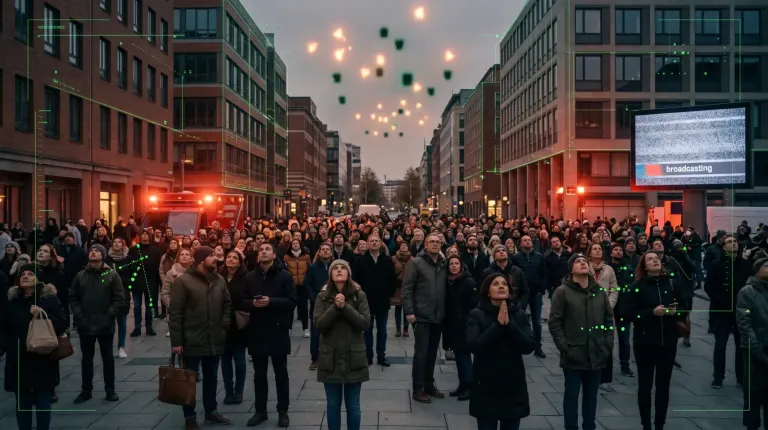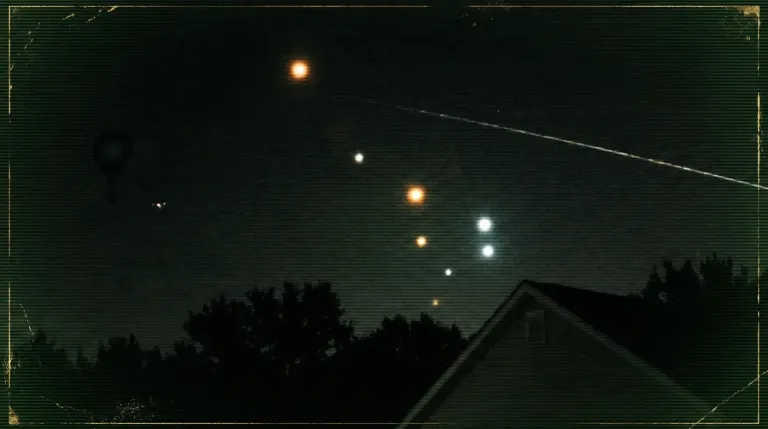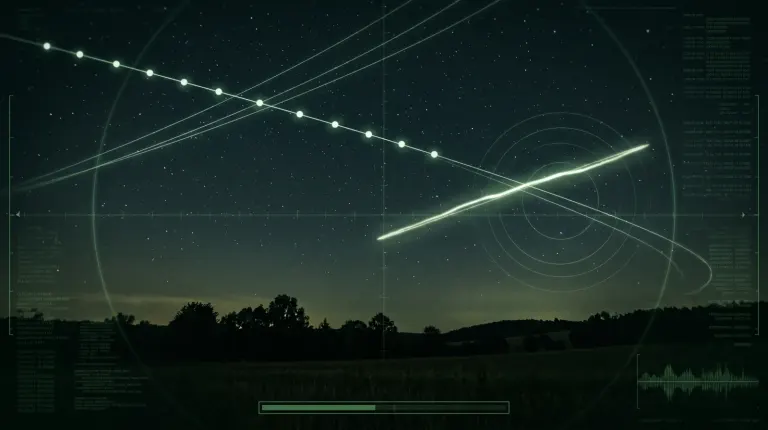

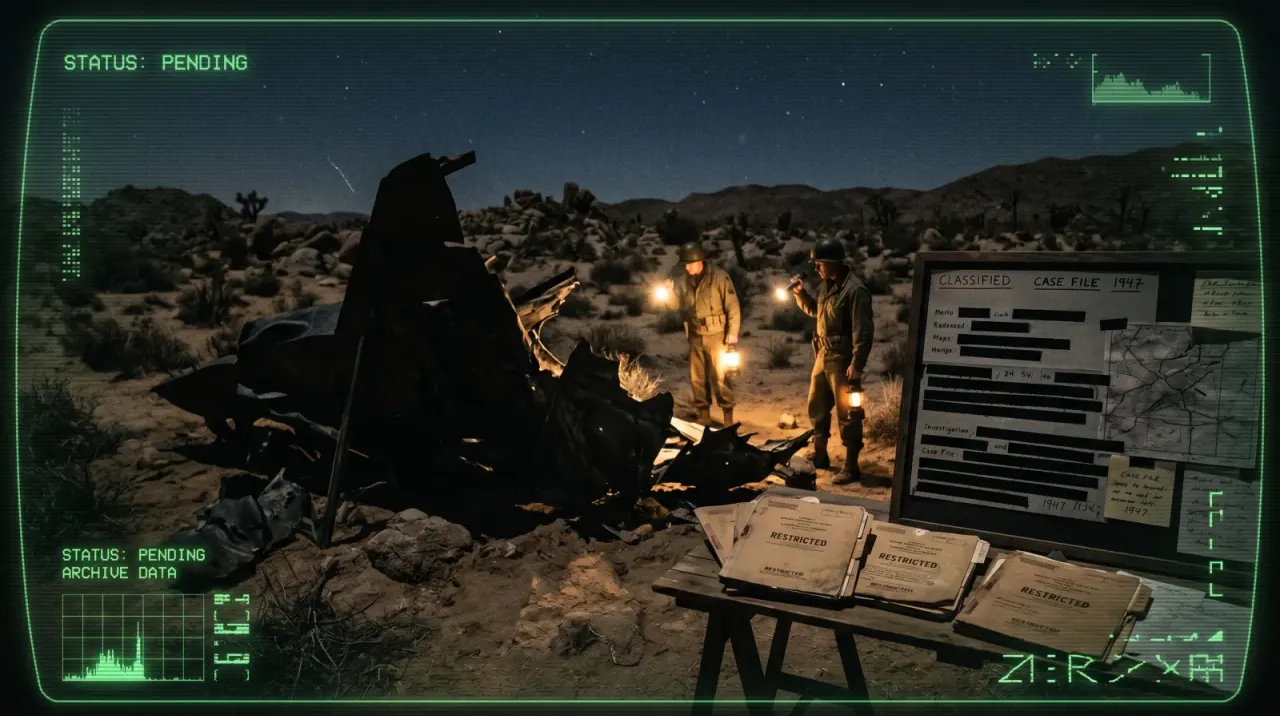
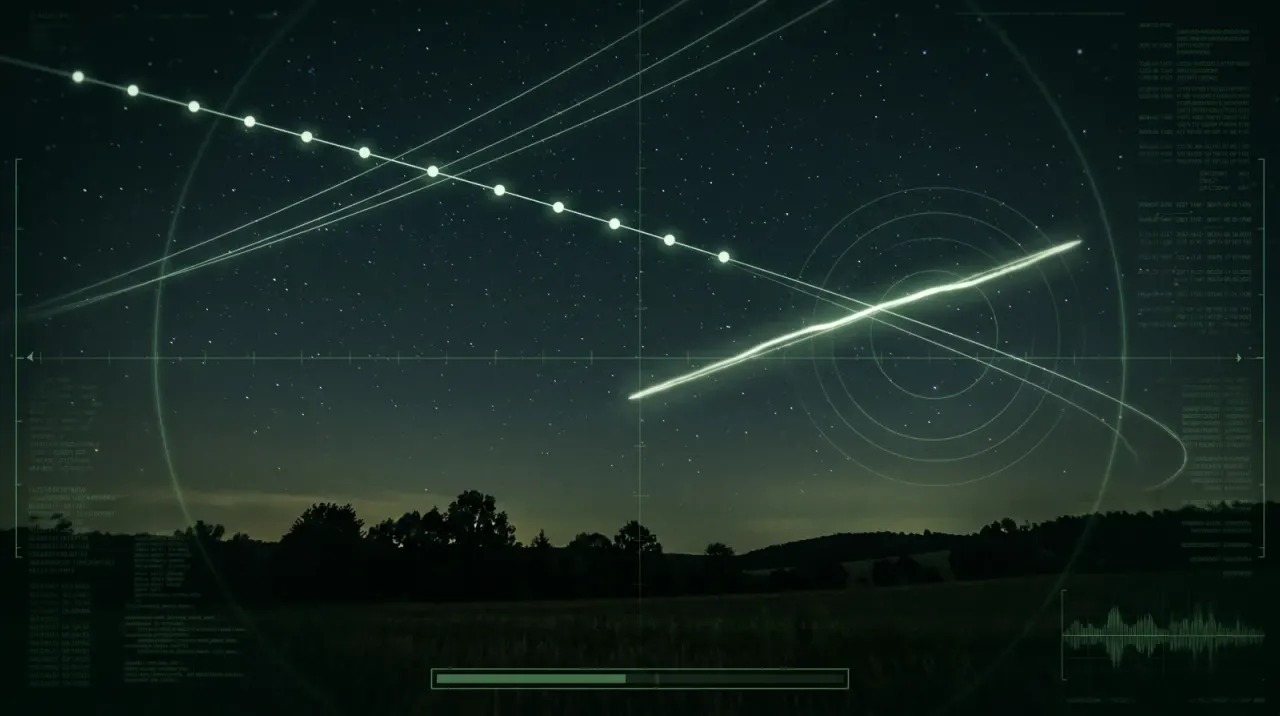
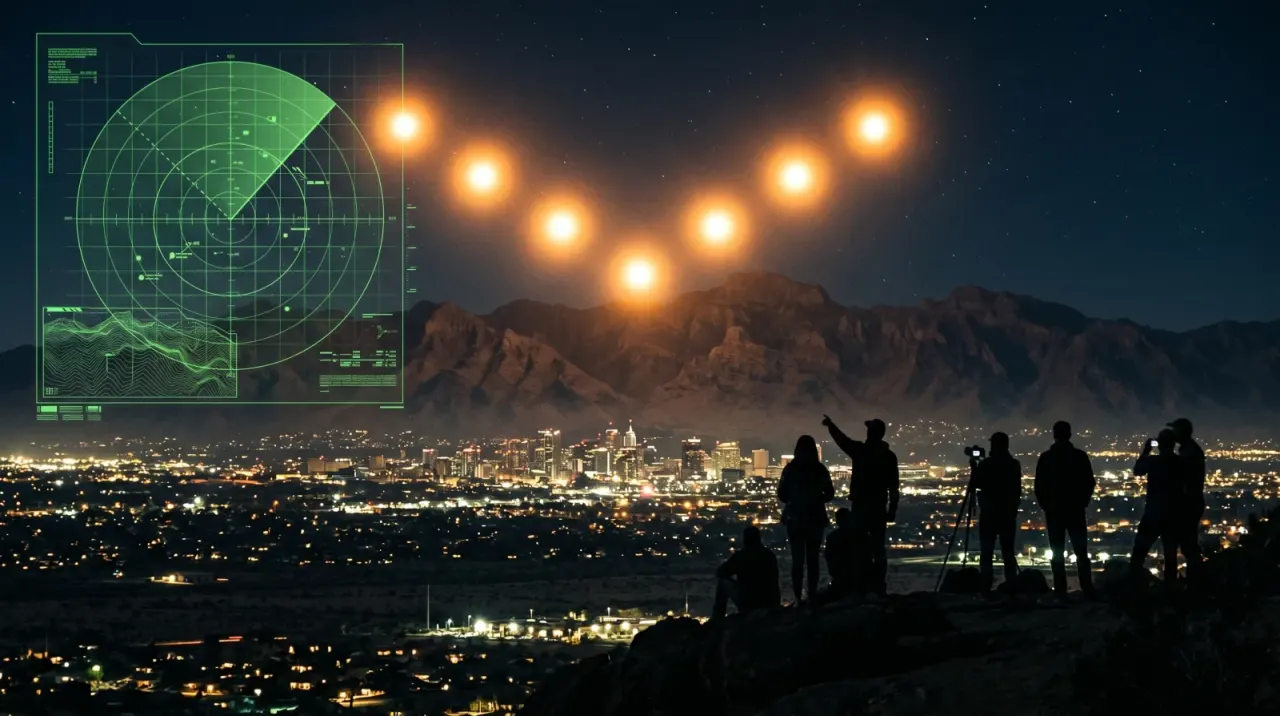
The Phoenix Lights were a major mass sighting on March 13, 1997, when thousands of people across Arizona reported lights or a large formation moving through the night sky. The official explanation covers at least part of the event. It does not cleanly satisfy every witness report.
The case matters because it shows how mass sightings fracture into phases. One group reports a moving V-shaped formation. Another sees stationary lights over Phoenix. Officials explain one layer. Civilians remember another.
What were the Phoenix Lights?
On March 13, 1997, reports came from multiple locations across Arizona and nearby states. Some witnesses described a huge, silent V or boomerang-shaped formation moving across the sky. Later that evening, bright lights appeared over the Phoenix area and were widely recorded.
Those two sighting phases are often blended into one memory. That is the first mistake. A useful case file separates them by time, location, motion, witness position, and available video.
Official record, witness claim, unresolved unknown
Official record
The official explanation for the widely filmed later lights is military flares dropped during training by aircraft associated with the Maryland Air National Guard. Flares can appear to hover, drift, and vanish as they fall behind terrain.
Witness claim
Many witnesses say they saw something different before the flare event: a massive silent object or rigid formation moving across the sky. Some described it as blocking stars or moving as one structure. Those reports are the reason the case remains culturally alive.
Unresolved unknown
The unresolved part is whether all reported phases can be explained by aircraft, flares, misidentification, and witness perception. The later lights have a strong official explanation. The earlier formation remains more disputed because the public evidence is thinner and witness descriptions vary.
Why do people ask about the Phoenix Lights?
People ask about the Phoenix Lights because the event feels public, urban, and hard to dismiss. It was not a lone witness in a remote field. It was a city-scale sighting with recordings, officials, families, pilots, and years of argument afterward.
The case also exposes a trust problem. If officials explain the visible videos as flares, witnesses who saw something earlier may feel erased. That gap between explanation and experience is where disclosure pressure grows.
What should civilians learn from it?
- Build the timeline first. Mass sightings can contain several different events.
- Film with context. Include horizon, buildings, stars, sound, and your location when safe.
- Capture witness positions. Ten witnesses in one crowd are not the same as ten witnesses across a flight path.
- Check ordinary sky traffic. Aircraft, flares, drones, satellites, balloons, and Starlink can create strange patterns.
- Stay calm in crowds. Panic spreads faster than evidence.
Use how to film a UFO at night and the misidentification guide before turning a light pattern into a conclusion.
How does this connect to first contact readiness?
The Phoenix Lights are a rehearsal for public uncertainty. People looked up, saw something strange, and had to decide how to react without full information. Some joked. Some panicked. Some documented. Some waited for authority.
First contact readiness means becoming the person who documents cleanly and keeps others calm. Start with the First Contact briefing, review readiness behavior, and take the classification quiz to identify your field role.
Common questions
Were the Phoenix Lights just flares?
The later widely filmed lights were officially explained as military flares. Some witnesses say an earlier silent V-shaped formation was a separate event not explained by the flare account.
Why do the Phoenix Lights matter?
They matter because they show how mass sightings can contain multiple phases, conflicting witness accounts, official explanations, and unresolved public trust issues.
See also For other mass sightings checked against the record, open the UFO case files. To tell flares from lanterns and planets on your own night, use the orange lights checklist.