
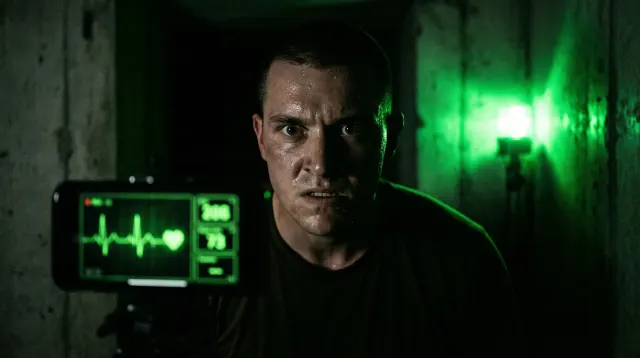
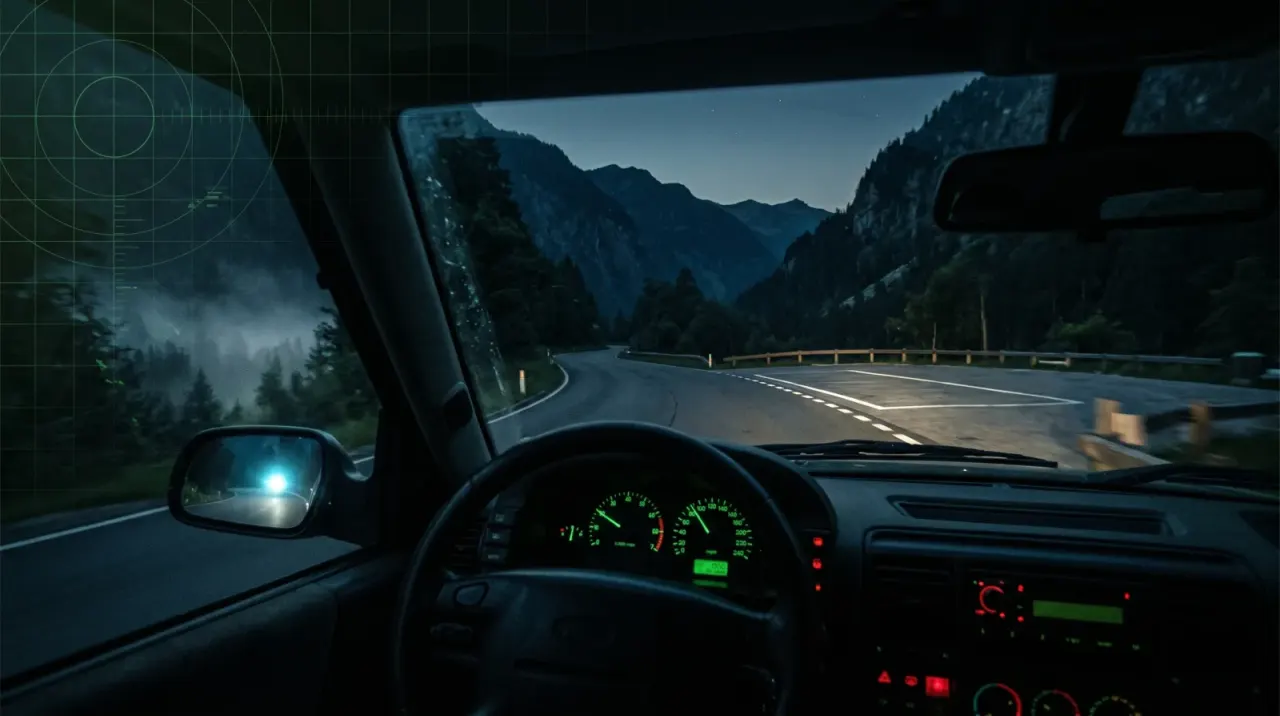
Drive the car. That boring rule saves lives when an object seems to follow you. Do not chase, speed, swerve, film as the driver, or stop somewhere unsafe. If there is a passenger, they record. If you need to stop, choose a public, well-lit place.
A vehicle sighting feels personal because the object appears to track your movement. It may be a drone, aircraft, reflection, planet seen through turns, another vehicle light, terrain effect, or something still unidentified. Treat it as a driving problem first and an evidence problem second.
The goal is not to prove the object while your hands are on the wheel. The goal is to keep the vehicle safe, gather useful context, and avoid turning an unusual sighting into an ordinary crash.
Why a car sighting feels different
Motion makes interpretation harder. As the car turns, a distant aircraft can seem to pivot. Reflections can move with the windshield. Terrain can hide and reveal a light. A planet can appear fixed while the road curves. Drones and helicopters can track roads for ordinary reasons.
That does not make the witness foolish. It makes context essential. The road, dashboard time, direction, mirror view, traffic, weather, and passenger statements matter as much as the light itself.
If the object is simply visible from the vehicle and not following, use how to film a UFO at night once you are safely parked.
The driver has one job
- Maintain the vehicleHold lane position, legal speed, mirrors, spacing, and traffic awareness. Mystery does not outrank physics.
- Refuse the chase impulseDo not follow the object, make sudden turns, run lights, enter private land, or drive into poor terrain for a better view.
- Delegate recordingIf there is a passenger, they record wide and narrate facts. If there is no passenger, wait until a safe stop.
- Choose the stop pointUse a gas station, public parking lot, busy turnout, police or fire station area, or another lit place with exits and people.
What should the passenger record?
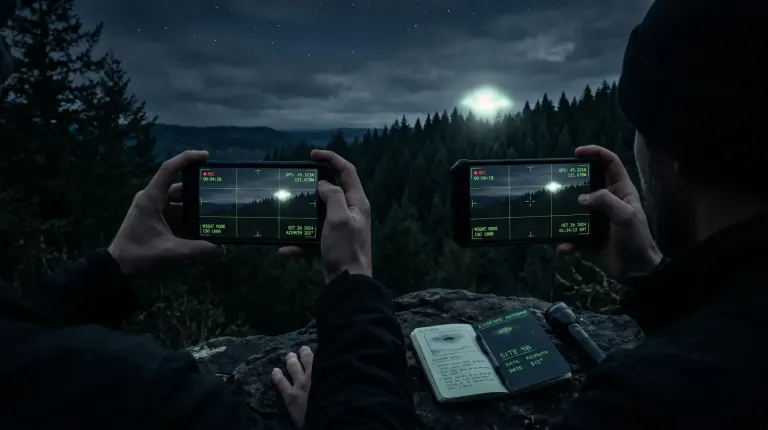
The passenger should record the object and the world around it. A glowing dot through glass is weak. A light with road direction, horizon, dashboard clock, audio, and route context is much stronger.
- Dashboard time, road name, direction of travel, and approximate speed if visible safely.
- Object plus horizon, treeline, mountains, buildings, signs, or other reference points.
- Audio of engine, road noise, witness comments, and whether the object makes sound.
- Turns, stops, and whether the object appears to change position relative to fixed landmarks.
- After safe stop, a second wide shot from outside the vehicle if conditions allow.
Preserve the original. Do not crop the road out. Do not stabilize away the motion. Do not add captions to the evidence copy. Use the UFO evidence checklist after the incident.
When should you call for help?
Call authorities for ordinary public safety issues: collision risk, road blockage, reckless driving nearby, fire, debris, injury, downed wires, traffic danger, or a crowd forming in the roadway. You are reporting a hazard, not asking dispatch to validate the object.
If there is no immediate hazard, focus on safe stopping and documentation. Afterward, compare against drone vs UFO, airplane, satellite, balloon or UFO, and local flight or satellite tools before making claims.
How does this connect to first contact readiness?
Vehicle sightings expose default roles fast. A Sentinel may chase to protect. A Scholar may stare at the object and forget the road. A Diplomat may try to signal from the car. A Survivor may flee too aggressively. None of those are automatically wrong instincts, but unmanaged instincts are expensive.
The classification quiz gives your default response a name. The First Contact briefing gives you the civilian frame. The readiness file turns the frame into a plan before the next dark road.
- Intel index keeps the public briefing archive in one place.
- How to film a UFO at night covers the recording mechanics once parked or delegated.
- What to do if you see a UFO gives the base first 90 second protocol.
- How to report a UFO sighting turns the route and footage into a clean incident packet.
Common questions
What should I do if a UFO follows my car?
Keep driving safely, obey traffic laws, do not chase or speed, have a passenger record if possible, move toward a well-lit public area, and document details after stopping safely.
Should I stop if a UFO is following my car?
Do not stop on a dangerous shoulder, isolated road, or blind curve. If you choose to stop, pick a safe public place with lighting, exits, and other people nearby.
Should the driver record the UFO?
No. The driver should drive. A passenger can record wide video with road, horizon, dashboard clock, and direction while the driver stays focused.
When should I call authorities during a vehicle sighting?
Call if there is immediate traffic danger, collision risk, injury, road blockage, reckless drivers, fire, debris, or another public safety issue.