









Field tools for the night you look up.
Work out what it probably was, write down what you saw, or put a number on the question behind all of it. Everything runs on your device.
Three field tools.
Identify a light, write it down, or put a number on the big question. Each one does a single job and tells you what it needs before you start.
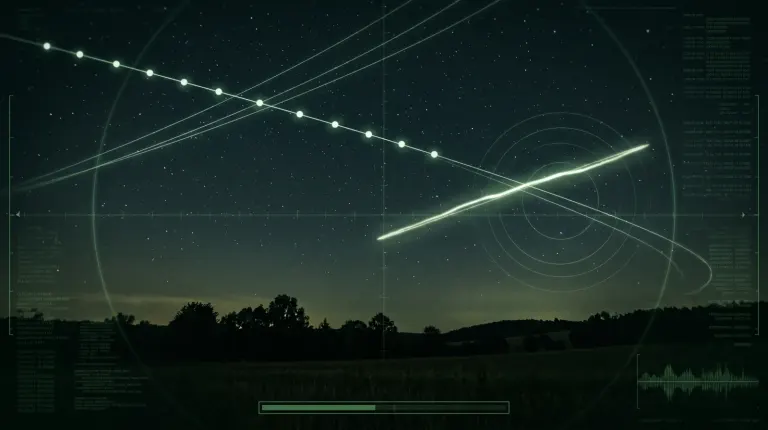 Tool 01What did I just see?Tell it when, where and which way you looked. It ranks the ordinary things it could have been, from the space station to Venus, and says so plainly when nothing in public data matches.Example result1. Jupiter. Strong match. Planet, 24° up in the east.NeedsThe time, your rough location and the direction you faced.
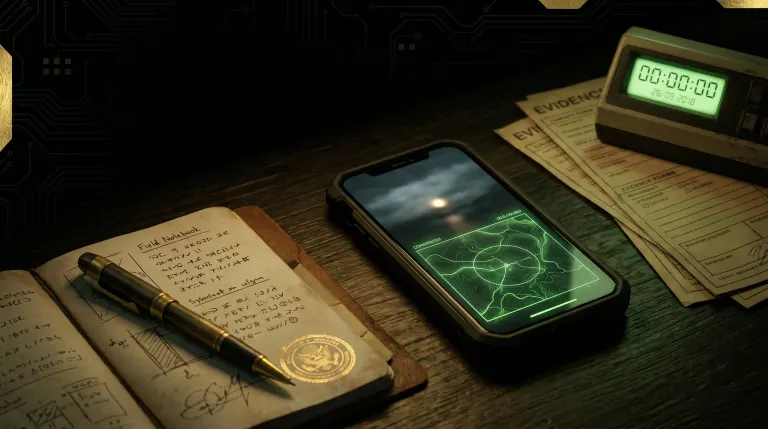 Tool 02UFO sighting report formA guided report that scores how useful it will be to an investigator, saves a clean PDF, and shows where to send it.Example resultReport strength 72 of 100, solid. Next: say how long it lasted.NeedsAbout ten minutes and your memory, the sooner the better.
 Tool 03Drake equation calculatorSeven numbers, four presets and a Kardashev gauge. It shows how much of “are we alone?” is measured and how much is guesswork.Example resultN = 20 detectable civilizations, on Drake’s own 1961 values.NeedsNothing but your own guesses.
The record behind the toolsNot a tool, but the place to check a claim: the Disclosure Ledger, every official UFO and UAP event since 1947 with a verdict.
These tools run in your browser. Nothing you type is sent to us. The report form keeps its draft in this browser only, and your location, if you choose to share it, stays on your phone.
If it happens tonight.
The order that keeps a sighting useful. Two of these steps live elsewhere on the site.
Identify it
Most lights have an ordinary answer. Rule those out first. Needs the time, place and direction.
Write it down
Within the hour if you can, before other people’s versions blur yours. Needs ten minutes.
Run the ten-second drill
Six decisions on a blackout night, a clock on each. It trains the reflexes a report depends on. Needs about three minutes.
Take the classification
Ten questions name the role you reach for first when something happens. Needs ten answers and no time limit.
Tools help. Knowing your job helps more.
Ten questions tell you which role is yours in the first minute, and you leave with a card that carries it.